Heat pumps can recover waste heat or heat from inside a building.
They also connect many networks: electricity, heating and cooling, industry and district energy. This reduces primary energy demand and lowers the impact on the electricity grid.
Heat pumps can be turned on and off in response to market or grid signals.
All of this reduces grid investments, optimises renewable energy use, and improves the economics of heat pumps for industry, businesses, and households.
This can save ‘electrified’ households 10-15% on their annual electricity bill.
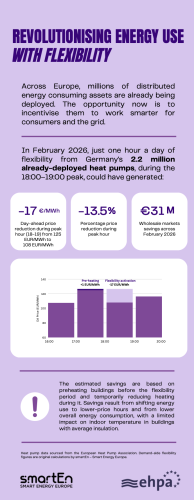
What if the 2.2 million heat pumps already installed in Germany could help bring down electricity prices?
New analysis from the European Heat Pump Association (EHPA) and smartEn – Smart Energy Europe shows they can.
Looking at a peak hour in February 2026, the analysis found that using Germany’s heat pumps more flexibly could have reduced wholesale electricity prices by 13.5% during that hour, cutting the day-ahead price by €17/MWh.
Across the whole month, this could have translated into around €31 million in wholesale market savings.