

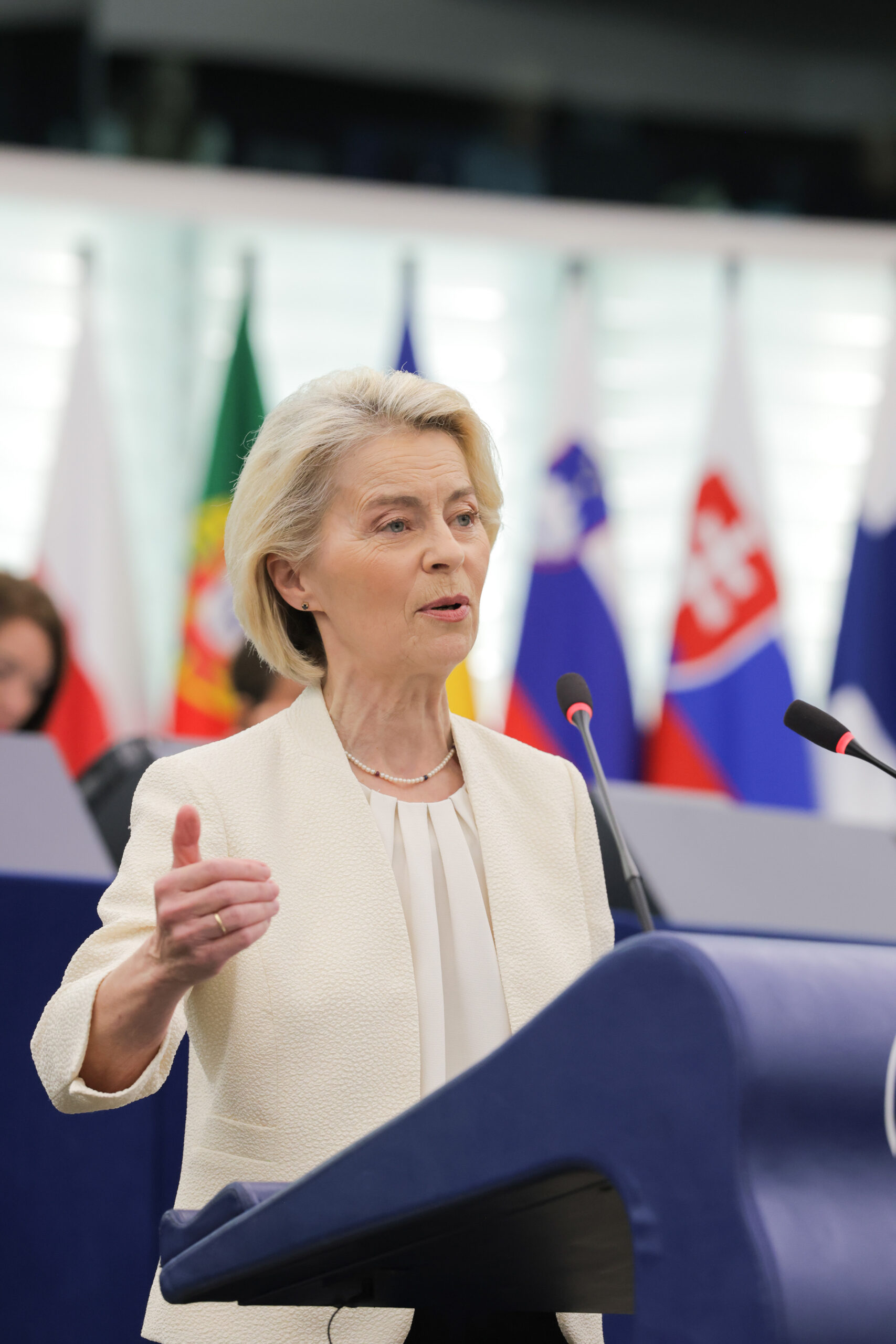
For Europe’s heat pump sector, ‘Let’s make Europe’s future electric’ was the key line in EU Commission President Ursula von der Leyen’s 2026 State of the European Union address.
Her argument was straightforward: Europe cannot be competitive while its energy prices remain structurally high – and it cannot be truly energy independent while it remains exposed to volatile global fossil fuel markets.
Europe learned this lesson when Russia cut off gas supplies. Now, geopolitical instability in the Middle East has brought it home once again.
Since the start of the conflict, von der Leyen said, imported fossil fuels have cost Europe an additional €90 billion, without providing “a single molecule of energy” more.
Paul Kenny, EHPA director general said:
“Electrification is power, but right now Europe’s getting weaker with each euro paid to fossil fuel importers. If we want to be in control of our energy, bring down costs and strengthen Europe’s industry, we need to ensure our electric future begins today. In the next few months, fossil fuel price increases will bleed European consumers, businesses and governments again. We need to ensure that electricity is made affordable long term to help consumers switch to electrified options, such as heat pumps for heating and cooling.”
The Commission wants to double the share of electricity by 2040, estimating that this could cut Europe’s fossil fuel import bill by €260 billion every year.
At the same time, Europe needs to invest faster in its grids, speed up connections and improve flexibility by rewarding consumers who use the growing renewable generation.
This is good news for Europe – and good news for heat pumps. Heating and cooling are still major sources of Europe’s fossil fuel consumption.
Electrifying them with heat pumps means replacing imported fossil fuels with increasingly European electricity, while using that energy as efficiently and flexibly as possible.
But von der Leyen’s speech went further. Energy independence was part of a broader push to strengthen Europe’s economic and industrial sovereignty.
She also called for action to ensure European companies can compete on a level playing field, alongside efforts to make it easier for businesses to operate across Europe through a stronger Single Market, faster permitting and less unnecessary administrative burden.
This matters for heat pumps. Europe has built a strong heat pump manufacturing industry and supply chain with over 300 manufacturing sites across the continent.
Keeping that industry competitive requires more than demand for clean technology: it requires affordable energy, fair competition and access to a Single Market that allows European manufacturers to scale. Europe’s push for energy independence and its push for industrial competitiveness therefore need to go hand in hand.
There was another important shift in this year’s State of the Union: cooling is moving up Europe’s political agenda.
After a summer of devastating wildfires and extreme temperatures, von der Leyen described climate change as one of the “tipping points” that will determine Europe’s future prosperity and security.
More than 35,000 additional deaths occurred during the heatwaves, she said, while hospitals and care homes dangerously overheated. The Commission will now present a new climate resilience framework and a European Heatwave Plan, covering early warning systems, health preparedness, urban adaptation and cooling.
That recognition is welcome. As EHPA has highlighted in its paper on cooling, Europe needs to prepare now for rapidly growing cooling needs – and ensure they are met efficiently and sustainably.
Heat pumps can help tackle both sides of the challenge. Reversible systems provide efficient heating in winter and cooling in summer. The technologies that help Europe cut emissions can therefore also help Europe adapt to the climate impacts already here.