

It sounds like science fiction, but it’s starting to happen today. Virtual copies can be made of physical objects or processes to help optimise them. Known as ‘digital twins’, these virtual replicas are useful because they allow data to be gathered and options to be tested options on the virtual model before rolling it out in reality.
This technique has huge potential for the industrial heat pump sector, and is already being tried out as part of the EU-funded SPIRIT project.
The first results from the project’s industrial heat pump digital twin models were presented at a recent webinar. The webinar was part of EHPA’s Heat BIG series, which brings together end users and the industrial heat pump sector.
Manuel Gräber, TLK Energy gave an insight into what such a tool can look like. He presented TLK’s newly developed web tools, the first of which allows you to analyse how much energy a heat pump will use and how much can be recovered. This is known as ‘pinch analysis’ and can help determine efficient heat recovery strategies, reducing the size and cost of heat pumps, and lower operational costs.
He also presented an industrial heat pump design tool, which lets you tailor heat pumps, compare different refrigerants and circuit concepts and optimise the efficiency of your system. Both tools are available for free.
That’s all well for the theory, but what about the practise?
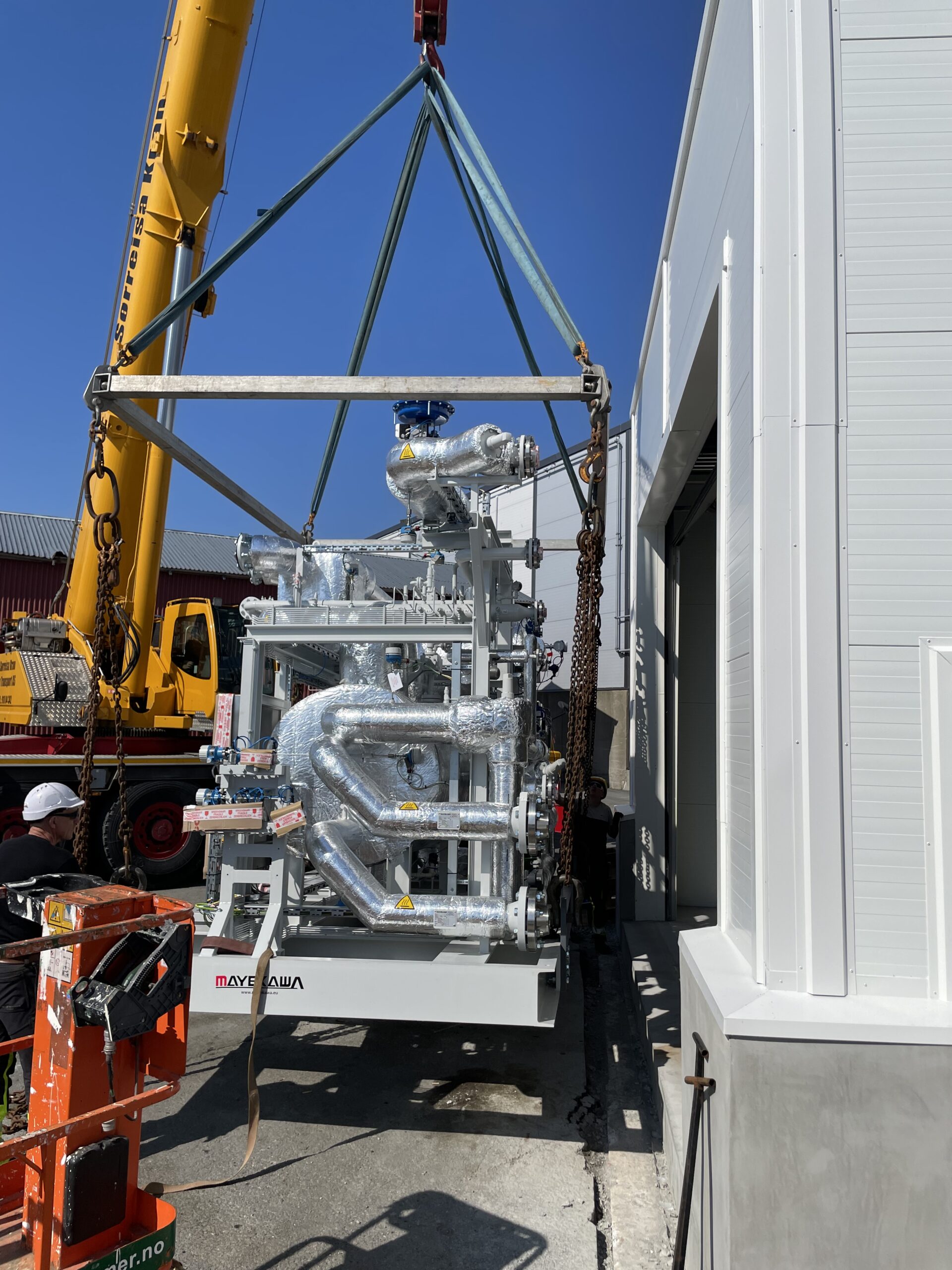
Wouter de Vries, TNO, Emil Navntoft Pedersen, Danish Technological Institute and Jens Oliver Gollasch, DLR presented three case studies, showing how these ‘digital twins’ are already being tried out at the three industrial heat pump ‘demosites’ of the SPIRIT projects.
Shrimp processing in Norway, sugar production in Belgium and a paper plant in Czechia have very different needs, from cooking seafood to low-pressure steam production. But all can be optimised by use of digital twins.
The results so far show how modelled performance can be compared with real operational data to optimise performance and energy use. This can help increase energy and fuel savings, costs and CO₂ reductions, supporting the wider deployment of heat pumps across different industrial processes.
The conclusion? This is an exciting new technique with massive potential. The developers are refining and enhancing their models, and the future could see this sort of technology rolled out far more widely in the industrial heat pump space.
Industrial heat pumps are certainly a fast growing sector, and it’s important to be aware of the funding opportunities. To that end, EHPA heat of innovation and webinar moderator Sonia Bianconi encouraged webinar participants to apply for the European Commission’s industrial heat decarbonisation auction, which opens in December with a budget of €1 billion.