

Europe is getting hotter, and cooling is no longer a luxury.
As heatwaves become more frequent and intense, more households are looking for ways to stay comfortable all year round.
Heat pumps are part of the answer.
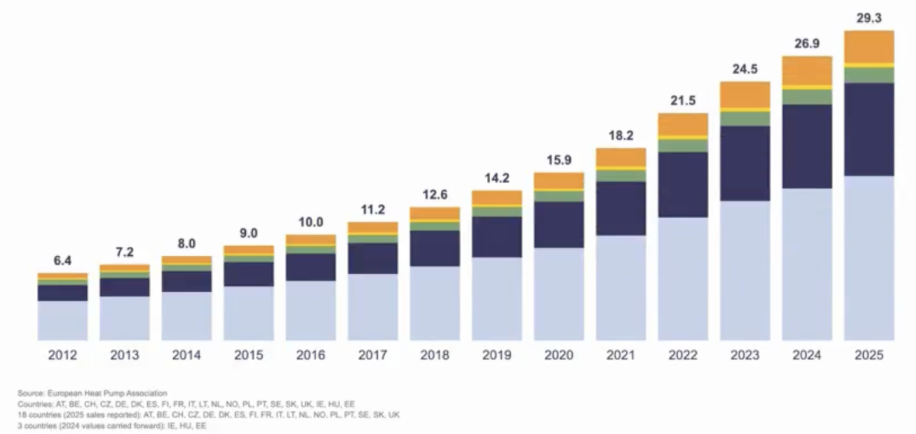
Already installed in around 13% of households across 21 European countries, there are now more than 29 million domestic heat pumps in Europe. And the number is even higher if units primarily used for cooling are included. In fact, if we were to include sales of all air-to-air heat pumps this would take us up to 7.3 million heat pumps sold in 2025.
Unlike traditional air conditioners, reversible heat pumps do double duty: they cool homes in summer and heat them efficiently in winter. That means lower energy use, lower emissions and lower bills throughout the year.
The technology is becoming increasingly popular. In 2025, residential heat pump sales increased in 14 of the 18 countries for which EHPA gathered sales data, with Germany and Italy leading the growth. As more Europeans experience hotter summers, demand for efficient cooling is expected to become an even stronger driver of heat pump uptake.
The European Commission has recognised the importance of electrification through its Electrification Action Plan, which includes measures to improve the electricity-to-gas price ratio, reduce electricity taxation and support investment in heat pumps. As these measures take effect, they can make efficient heating and cooling more affordable for households across Europe.
Cooling should also become a bigger part of Europe’s energy and climate strategy.
Recognising cooling as an essential energy service and promoting reversible heat pumps as the default solution for year-round comfort will help Europe adapt to a warming climate while reducing its reliance on fossil fuels.
To accelerate the transition, policymakers should ensure financial incentives, building rules and energy performance frameworks fully recognise the benefits of heat pumps that both heat and cool.
Social leasing schemes can make these technologies more accessible, while smart controls and flexible electricity tariffs can help maximise renewable electricity and reduce pressure on the grid.
Certification schemes should also keep pace with innovation; consumers and installers need better information about the full range of heat pump solutions available, and policies should encourage the recovery and reuse of waste heat from cooling wherever feasible.
Want to explore the latest heat pump market data and trends? EHPA members can access our Market Intelligence Platform, featuring detailed country data, market analysis and exclusive insights into Europe’s heat pump sector.