

On a boiling June day, the topic ‘no warmth wasted’ could not have felt more appropriate. However, the warmth being addressed at the latest Heat BIG webinar was not weather-related, but waste heat from industrial and other processes, and how this can be captured and used.
Two key ways were explored: either it can be turned into electricity through a process called ‘organic rankine cycle’ (ORC) or into higher temperature heat via industrial heat pumps.
While this process can seem ‘too good to be true’ – as Matt Curry from ICE Thermal Harvesting quoted his clients as saying – it works, saves costs, and helps industry decarbonise. Indeed, it’s a ‘major untapped energy resource’ as Hans Korteweg from COGEN Europe put it.
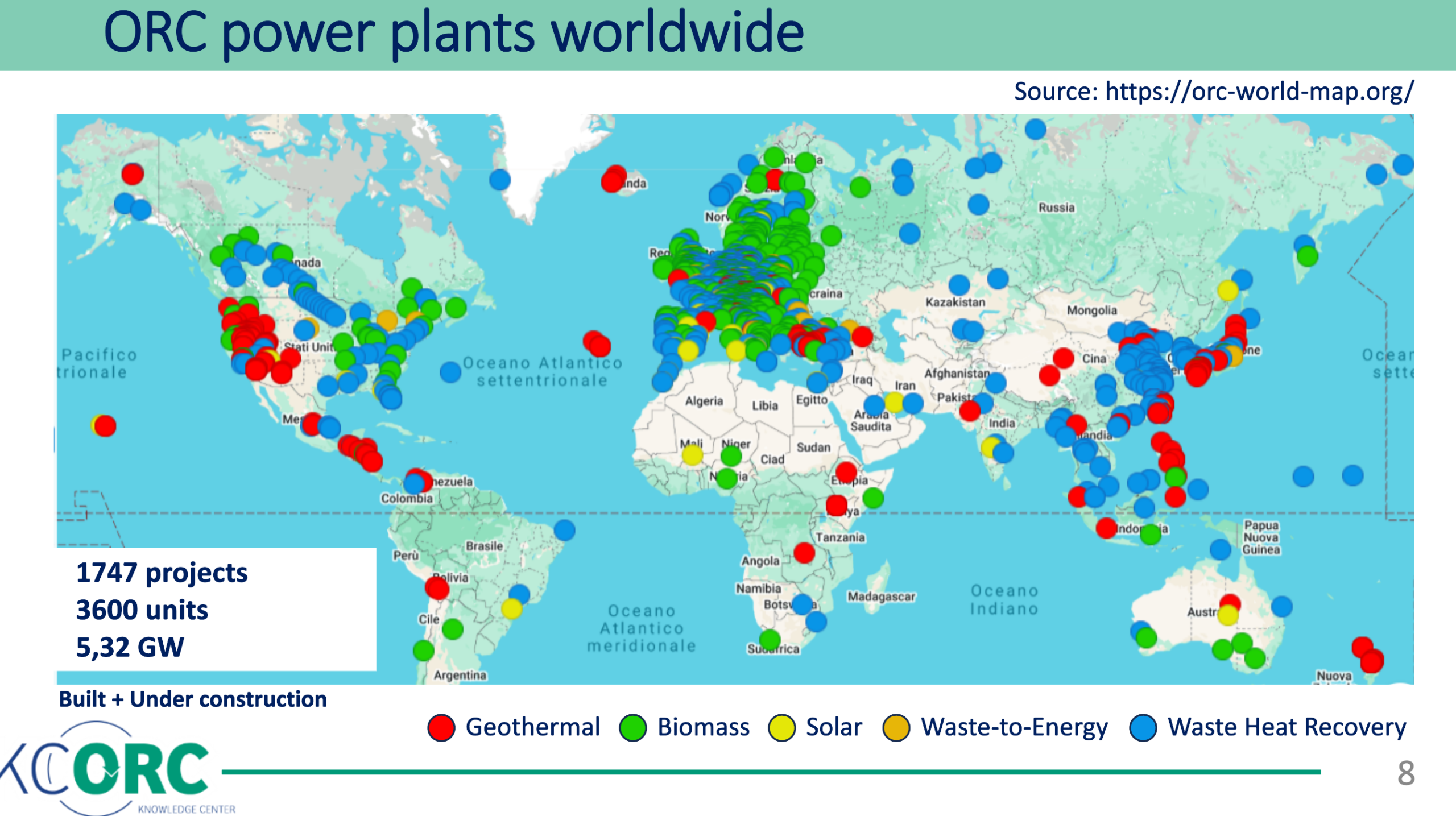
While there is still huge potential, waste heat recovery is already gathering momentum. There are already 730 ORC-technology waste heat recovery projects, Marco Astolfi from Politecnico di Milano pointed out. These can be used in sectors from fossil fuel engines, geothermal, biomass to chemical and cement.
The most efficient way to capture and re-use waste heat is via industrial heat pumps, Jozefien Vanbecelaere from the European Heat Pump Association explained. Each unit of waste heat can be transformed into three to five units of higher temperature process heat. Such heat pumps have huge potential especially in sectors like paper & pulp and food & drink, where a large share of the process heat is under 200°C. Indeed, around 7 TWh of industrial heat pump capacity is installed in Europe today – but this could be increased over 100 times.
As for ORC, the technology is already being integrated into high temperature processes like cement manufacturing. Richard Aumann from ORCAN pointed out the opportunities in that sector, whose CO2 emissions if it was a country would bring it into third place behind China and the US. Mirko Ferrari from Turboden gave the example of Riyadh Cement Company in Saudi Arabia, where exhaust gas and hot air from the clinker cooler are captured and converted into electricity by the ORC technology.
How then to encourage uptake of these waste heat recovery technologies? The financial question came up several times. There is a need for a supportive financial framework, Fabio Bernareggi, CTP said. For Jozefien Vanbecelaere and EHPA, addressing electricity costs is key for heat pumps: the upcoming Electrification Action Plan of 15 July will be a key opportunity for the EU to address this issue.
The webinar was hosted by Jozefien Vanbecelaere, EHPA and Piero Colonna from Delft University of Technology. It was organised as part of EHPA’s Heat BIG series, supported by Turboden. See more information on the next webinars.
Watch the recording and see the slides, below.
Loading PDF...
Error loading PDF. Please check the URL or file.