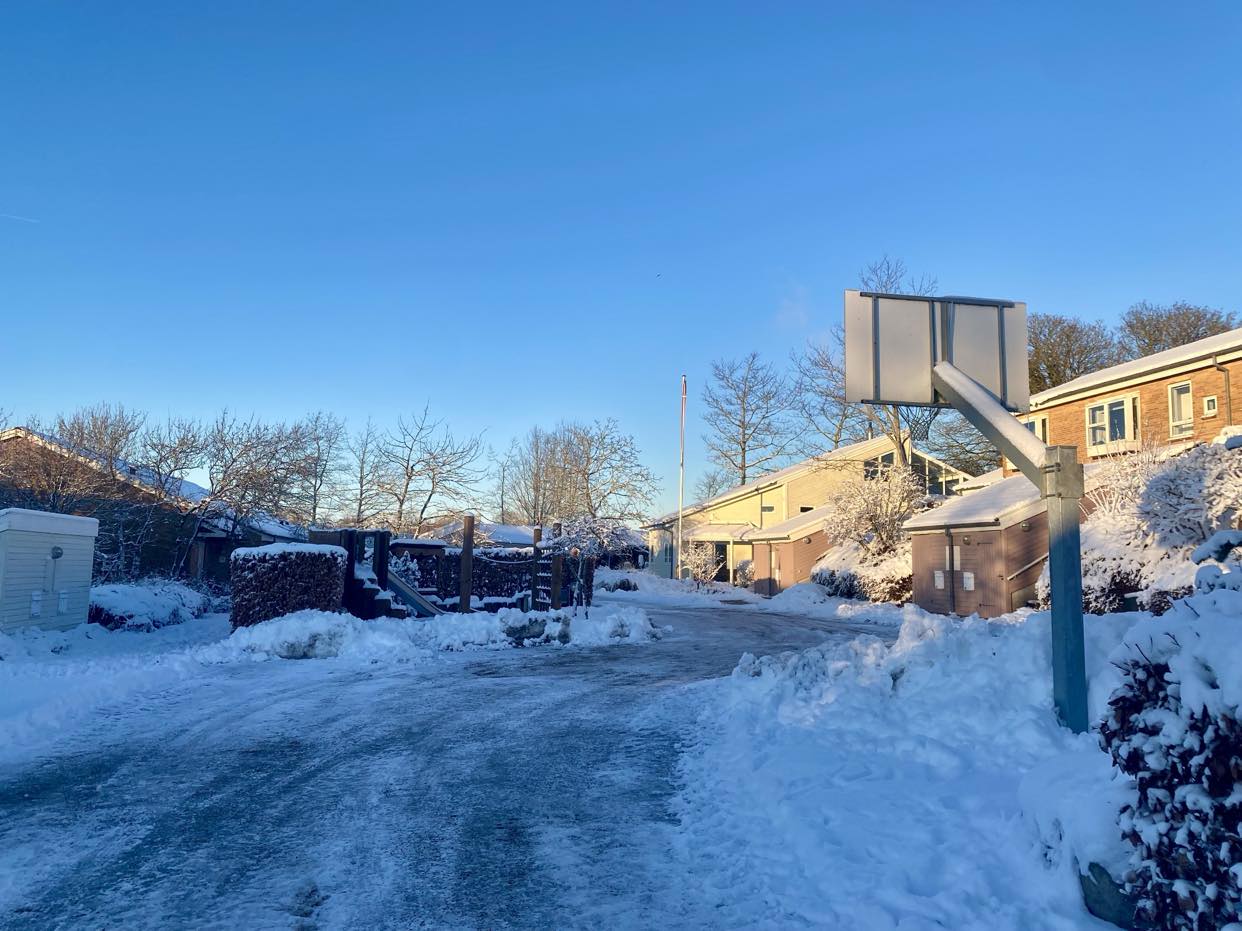

A/B Enghusene, a housing cooperative of 20 terraced dwellings (built 1990) and a communal building (built 1941) in Jystrup, Denmark, needed to replace a worn-out central gas boiler and its insulated distribution network. The goal was fossil-free heating and domestic hot water at a predictable cost in a village where conventional district heating is not viable. Denmark aims to phase out gas heating by 2035.
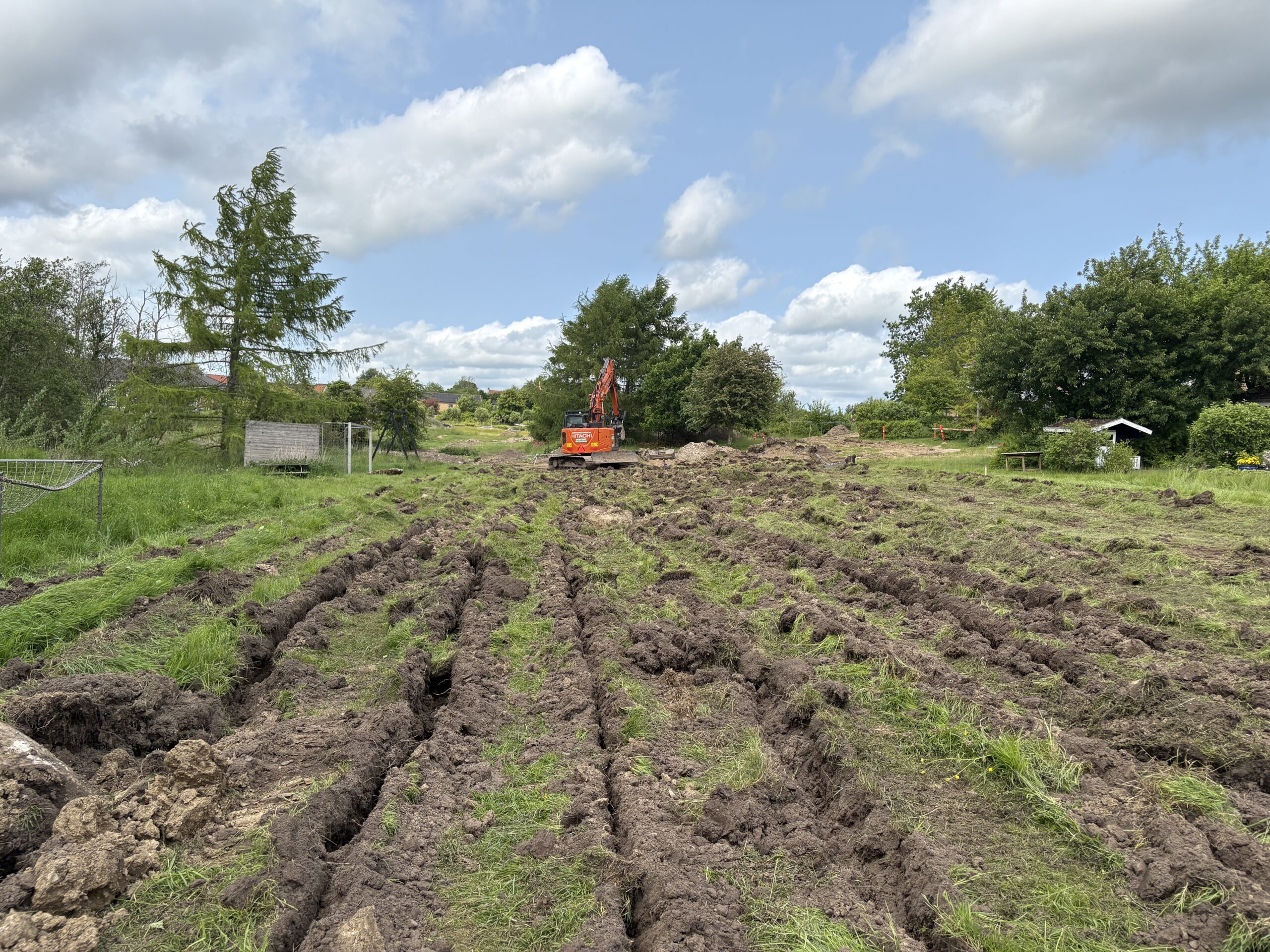
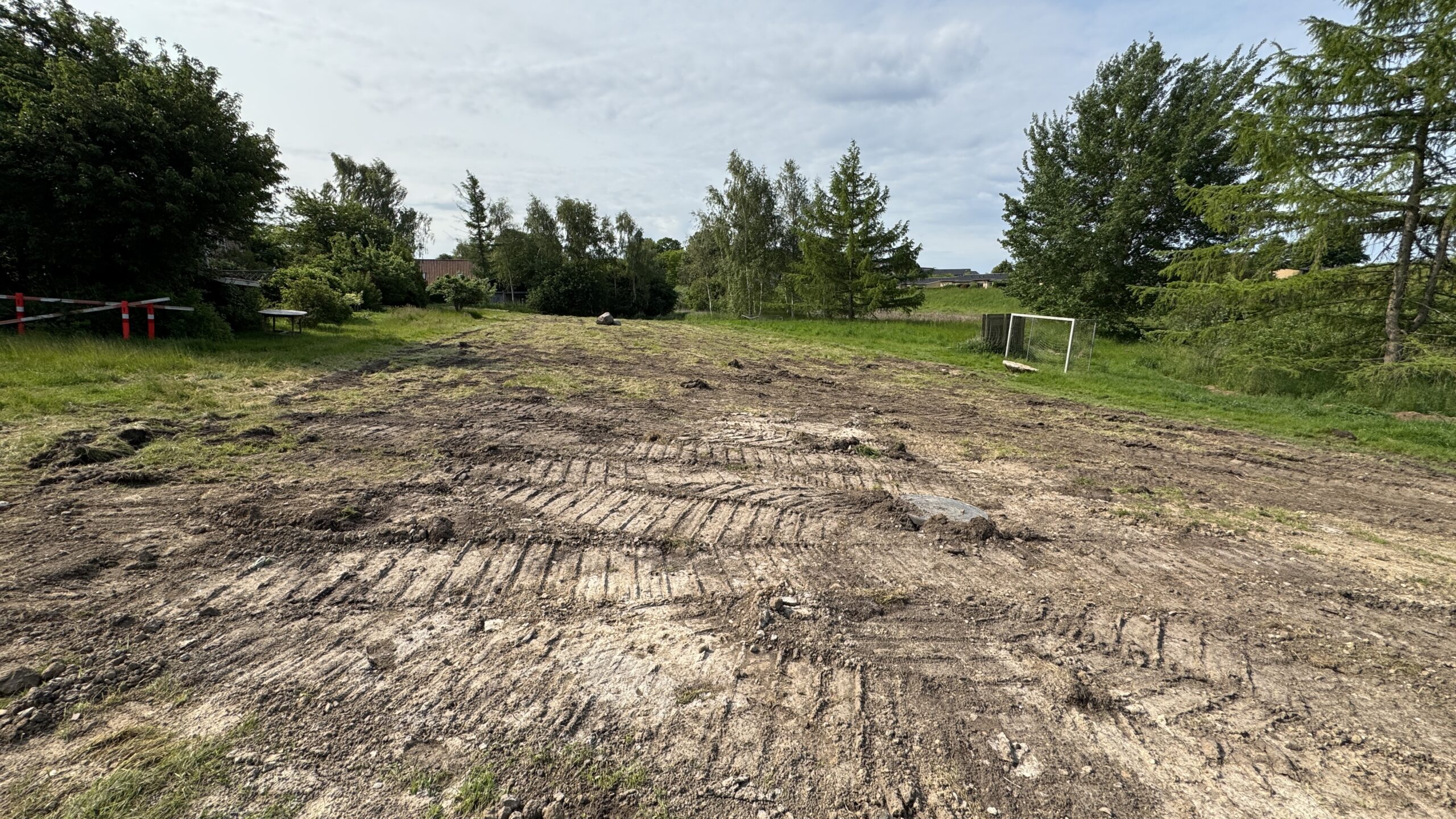
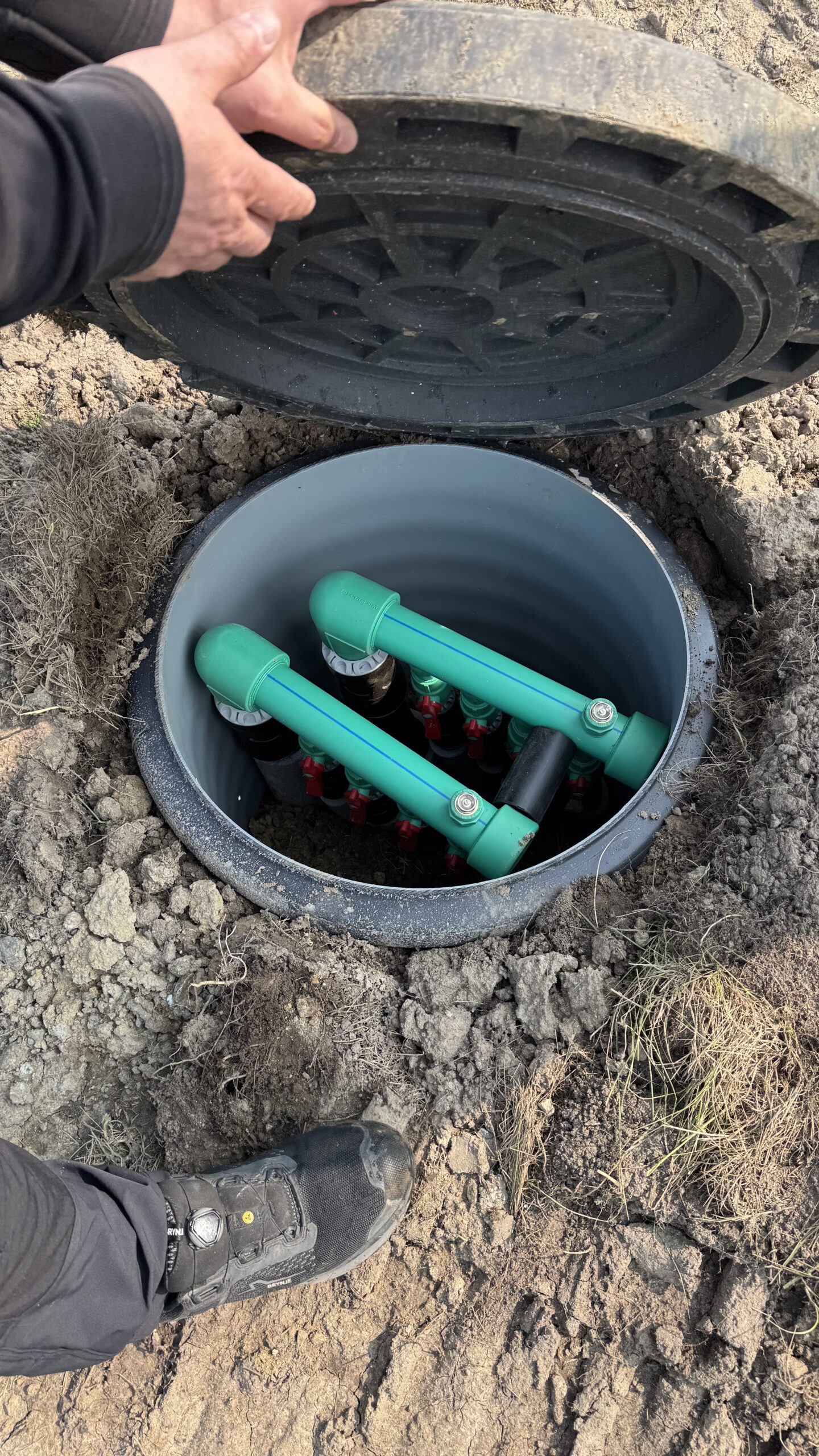
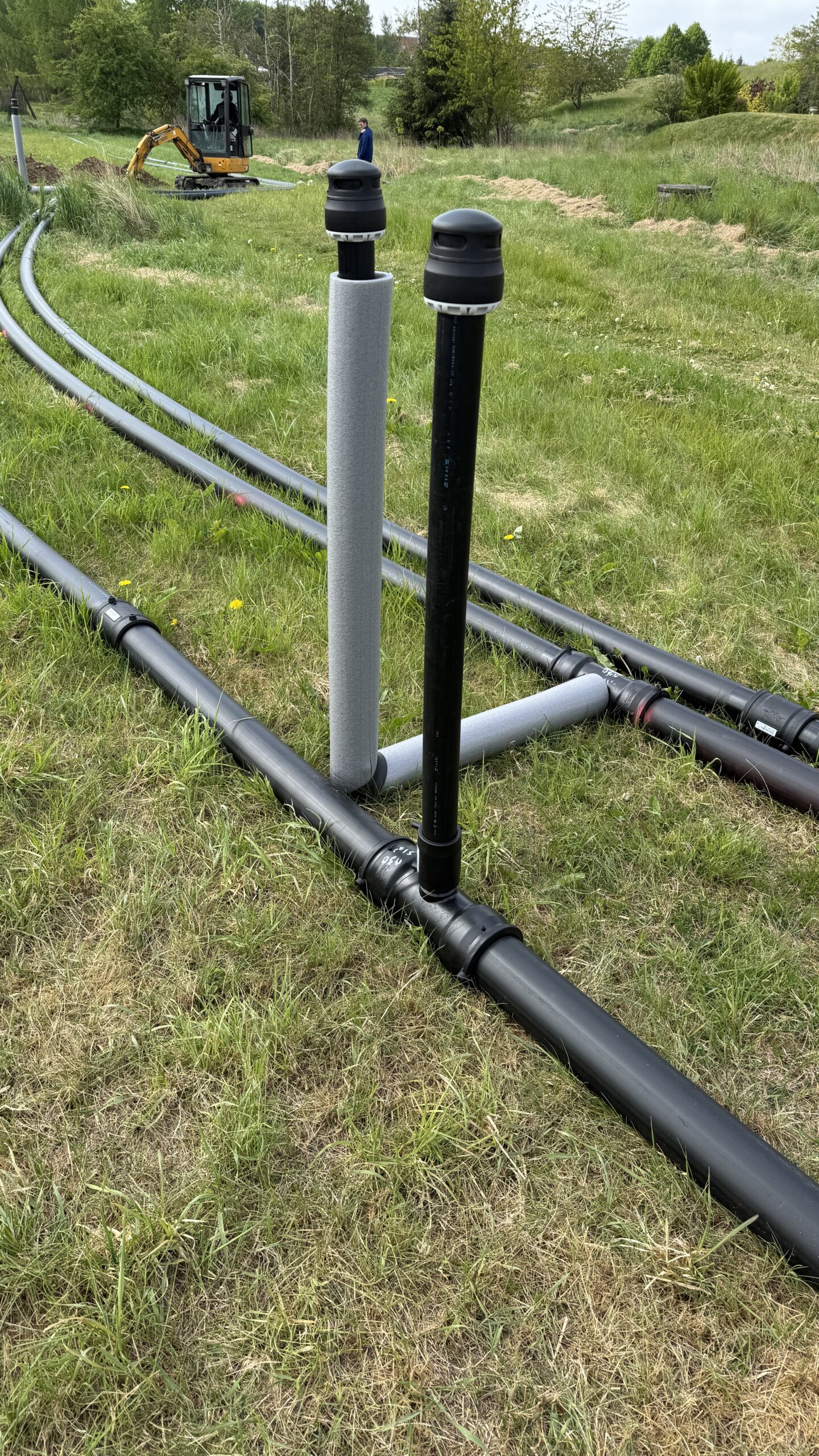
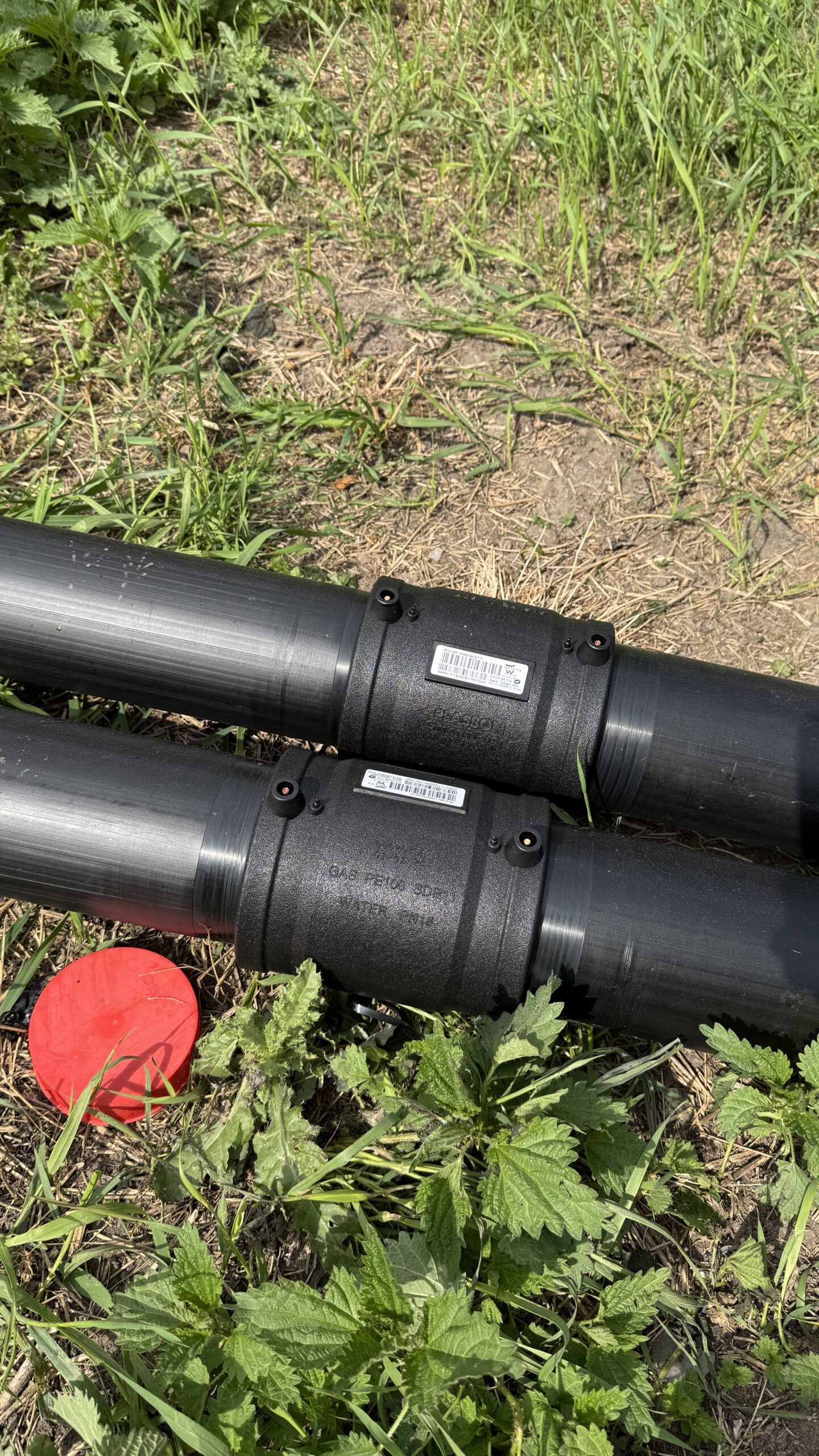
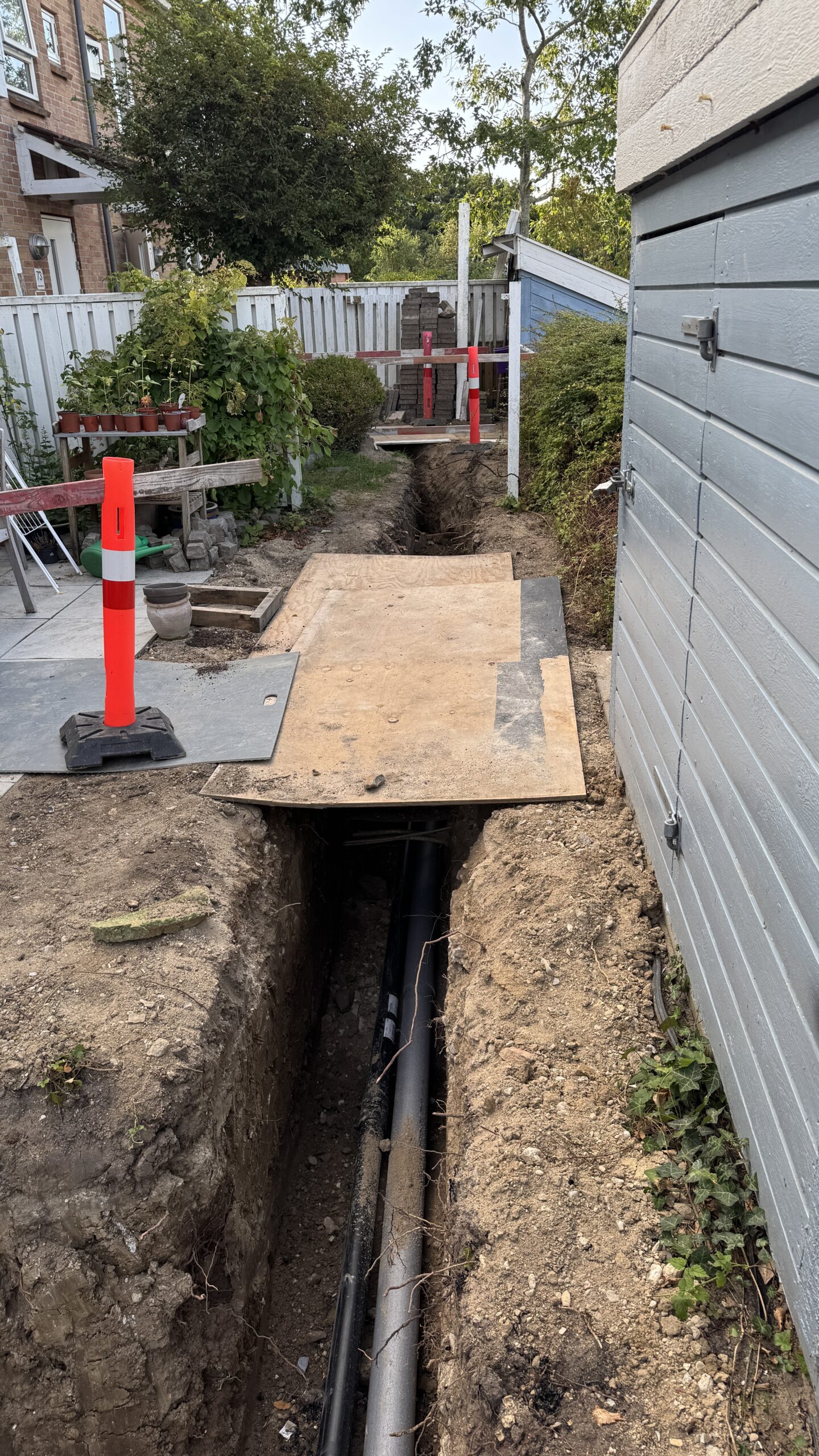
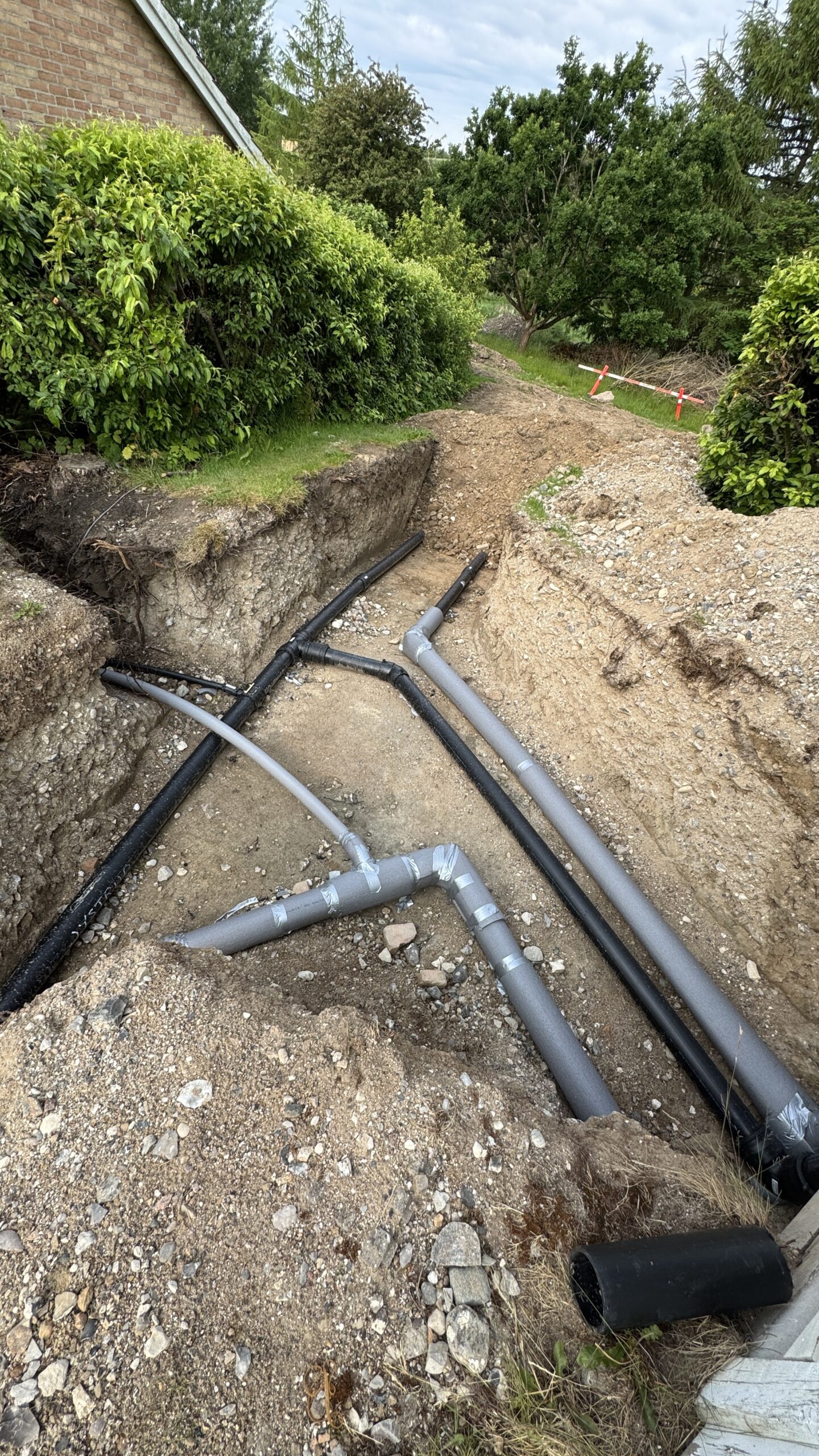
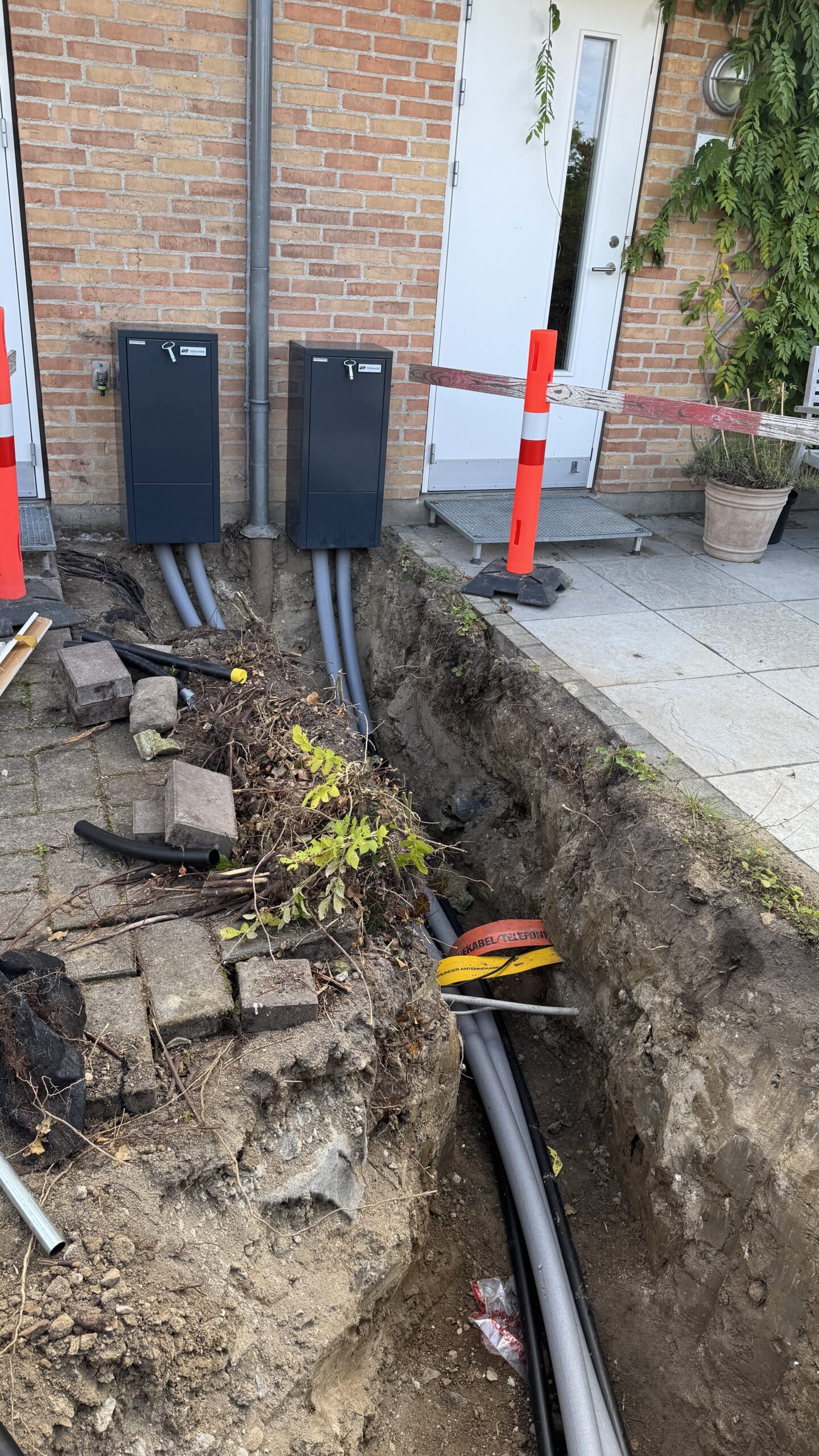
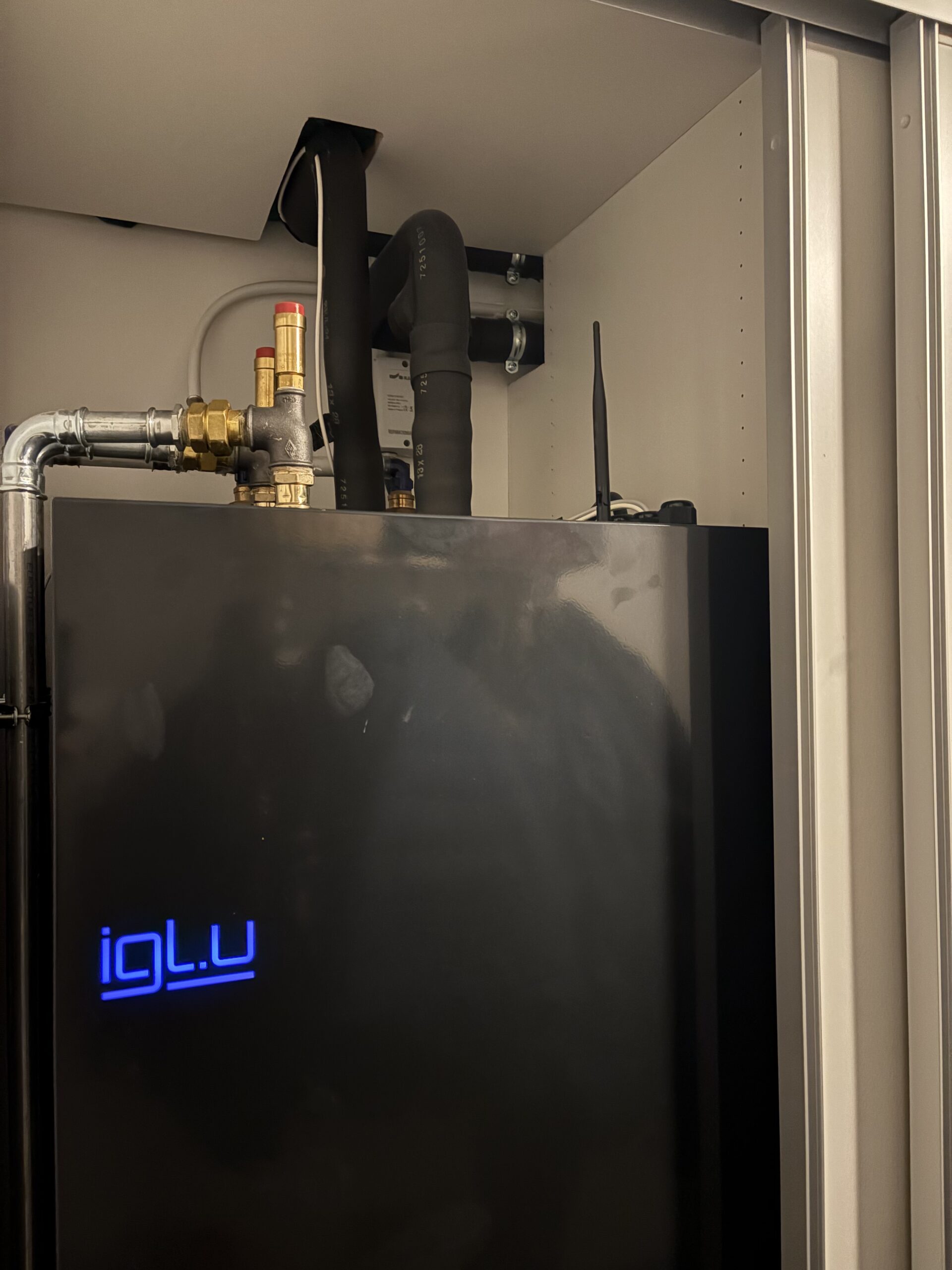
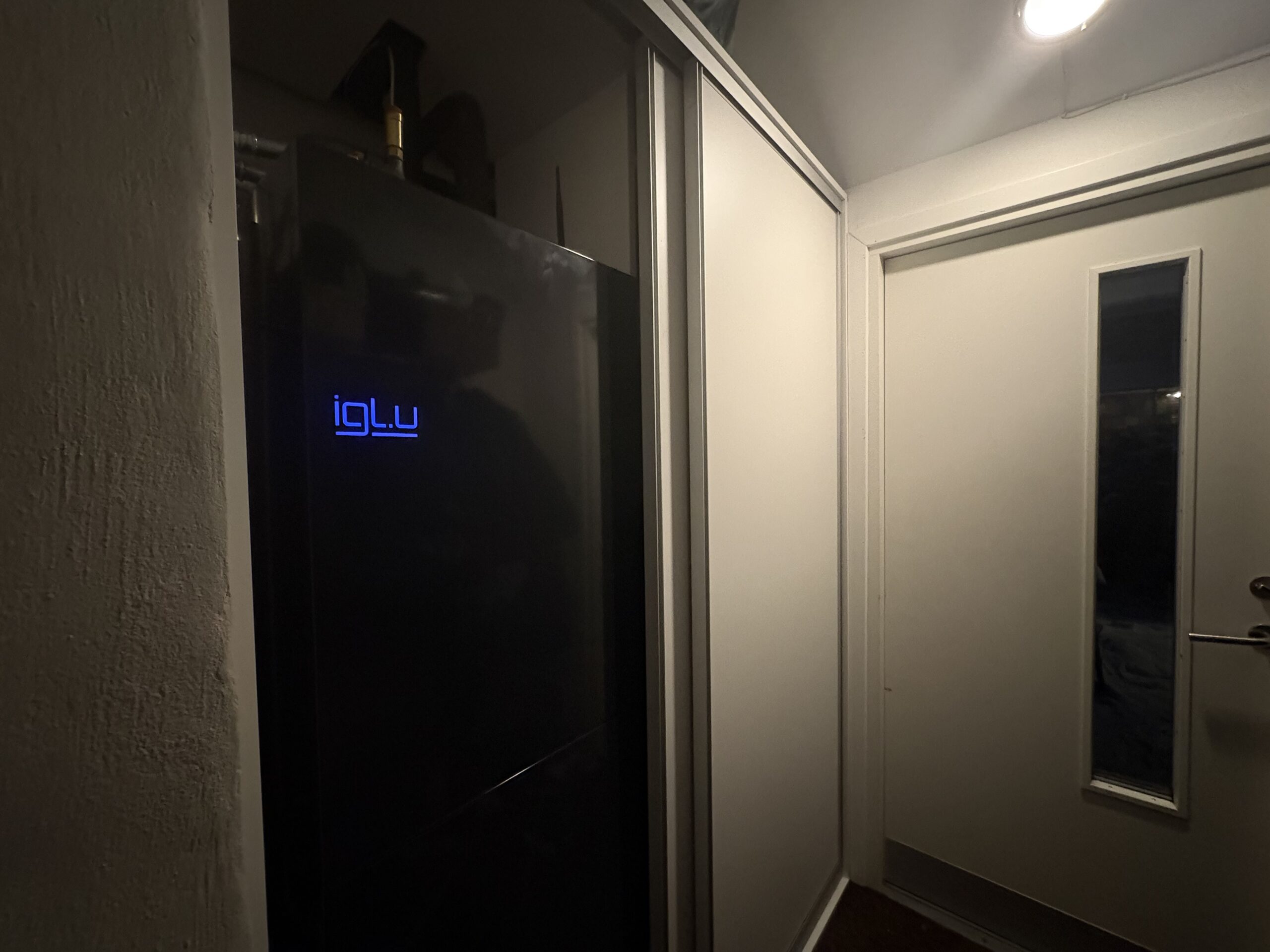
The cooperative chose a networked geothermal system with three elements. Heat is collected by 4,800 metres of PE pipe ploughed in at approximately one metre depth on adjacent municipal meadowland, made available by Ringsted Municipality under a registered easement. A thermonet of approximately 370 metres of uninsulated PE pipe connects four manifold chambers to all buildings and operates at 2–10°C, gaining heat from the soil rather than losing it. In each building, an inverter-driven 1.5–7 kW brine-to-water heat pump with integrated hot water cylinder supplies space heating and domestic hot water.
As thermonet solutions are not yet widely known, no turnkey offer was available The cooperative took the client role itself, supported by a client adviser – a model that could be replicated by housing cooperatives and cohousing communities across Europe. All 21 heat pumps were in operation by August 2025.