

1 December 2026
Brussels, Belgium
#HPForum 2026
Award Ceremony
1 December 2026
SQUARE Brussels

Competing in the category:

Building Solutions Award
bosch.com
Location: Germany
Year of submission: 2026
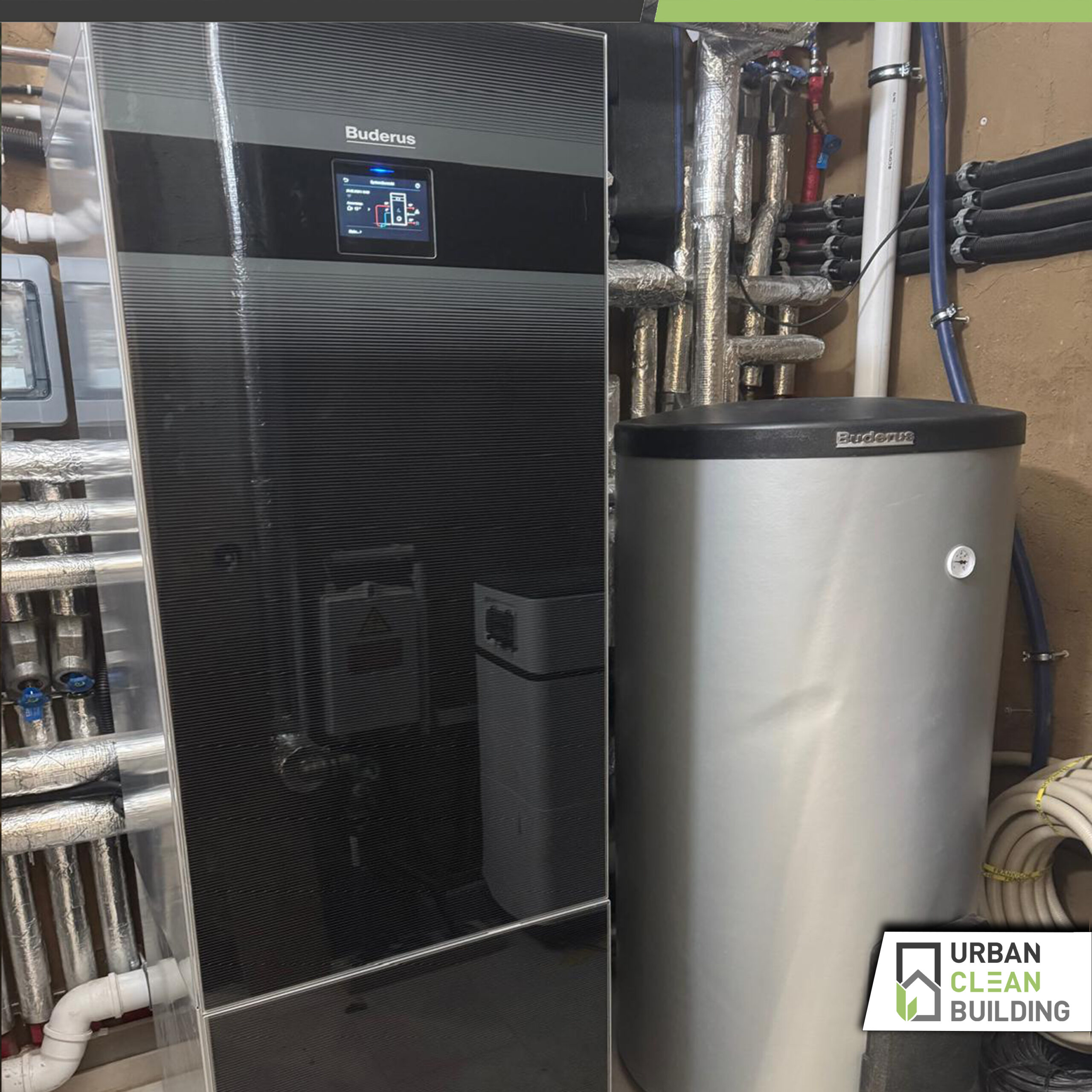
Organisation: Urban Clean Building — Michael Bader, project architect and integrated building concept. Die Erdwärmebohrer — geothermal feasibility, permits, EED design and drilling of two 90 m boreholes. Bosch Thermotechnik / Buderus — ground-source heat-pump manufacturer.
Sector of application: Residential
Funding from: Private; Public

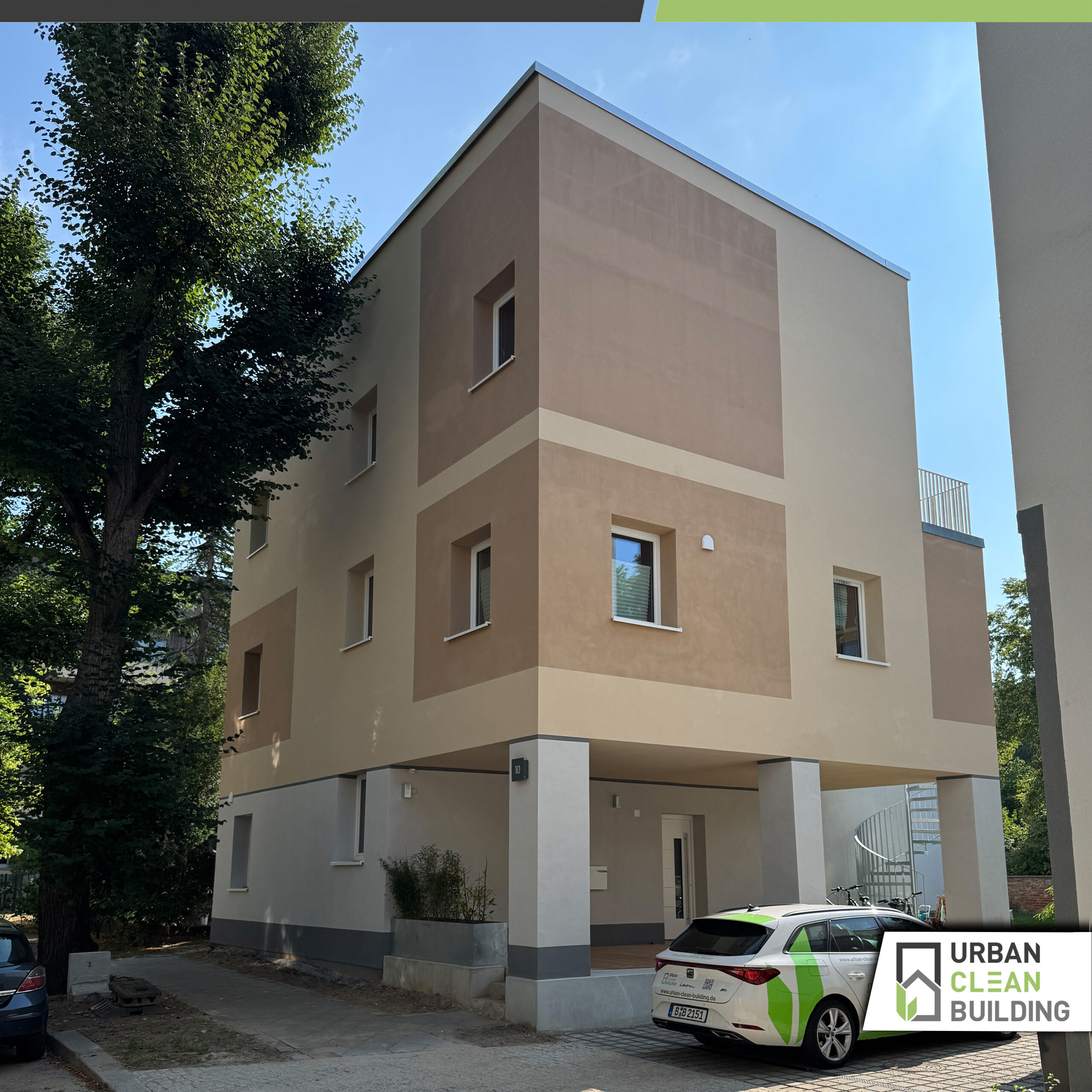
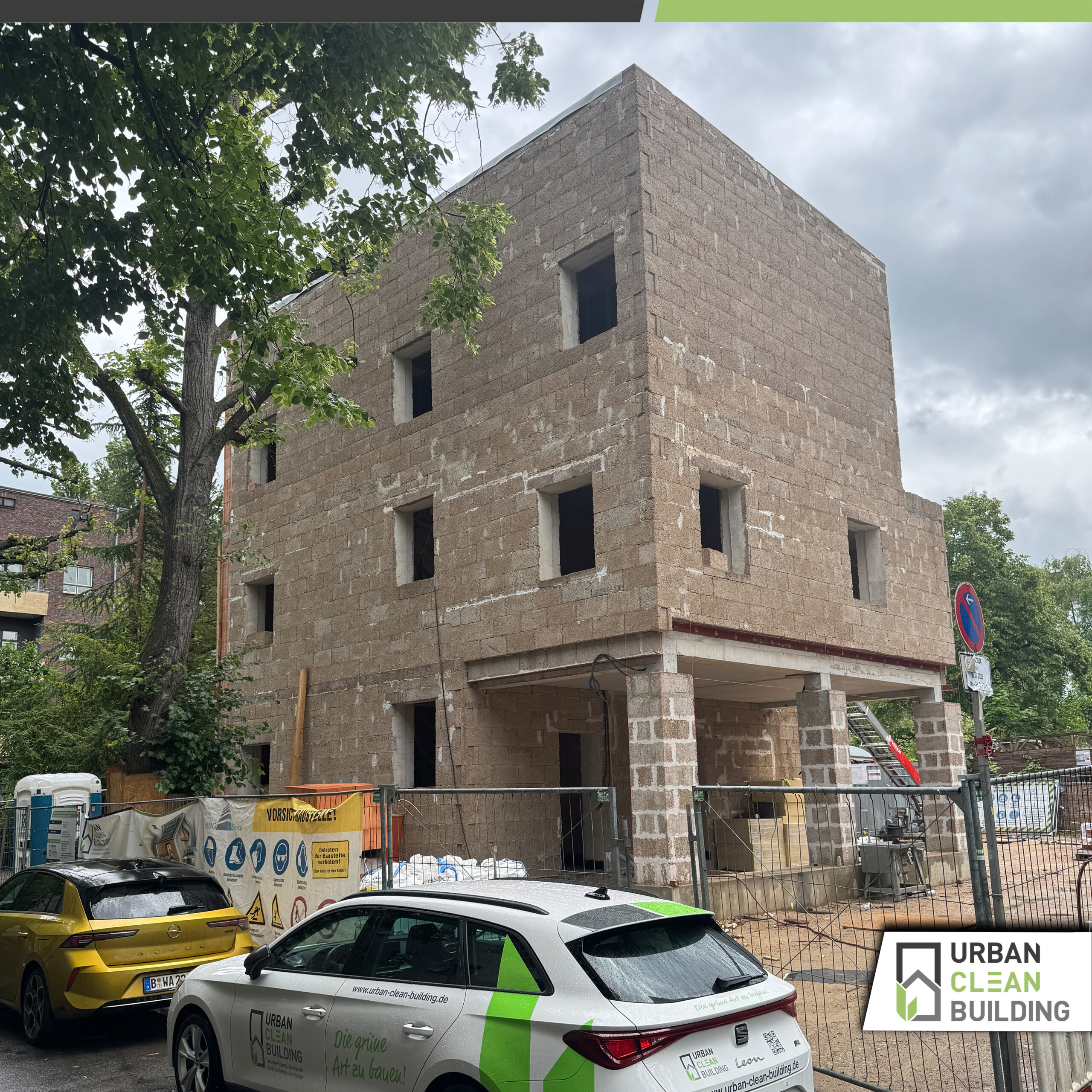
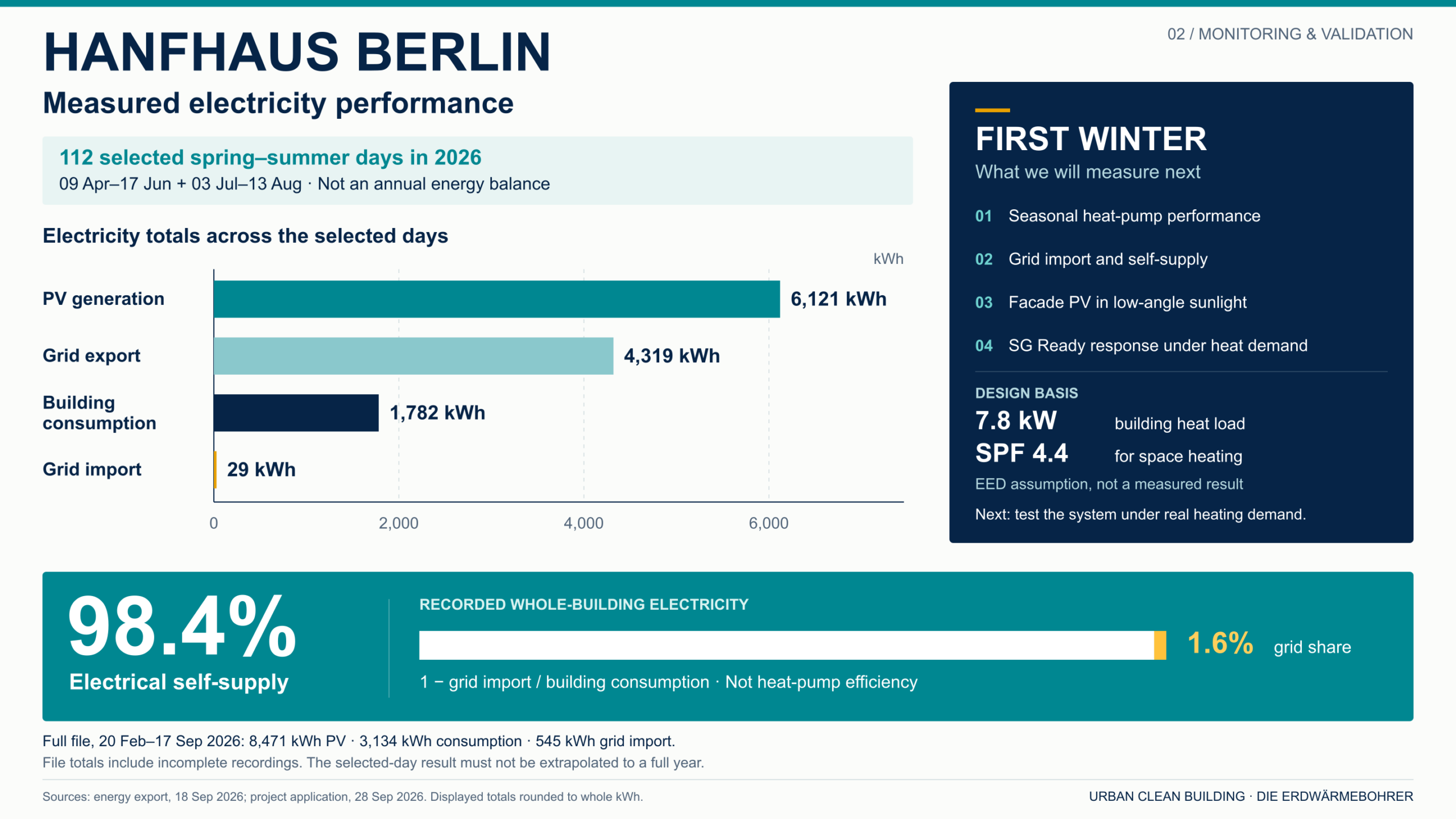
Walk up its stairs and you are stepping on treads from Berlin’s former Tegel Airport. Open a kitchen drawer and you pull on an old fire hose. The walls are made of hemp. And the heat comes from 180 metres of boreholes beneath a small city plot. These are not separate sustainability gestures — they form one building concept. The Hanfhaus shows that a heat pump project does not have to be a compromise. Its heat pump connects local ground heat with solar electricity, battery storage and forecast-informed thermal charging. Across 112 selected, fully recorded days between April and August, the house drew just 29 kWh from the grid while producing more than three times the electricity it consumed. These are spring–summer results, not annual performance. The first winter is still ahead, and we will share those results just as openly. Low-tech materials, high-efficiency geothermal heat and real measured data: the Hanfhaus shows what the heating transition can look like at the scale of a family home — beautiful, circular and built with technology available today.

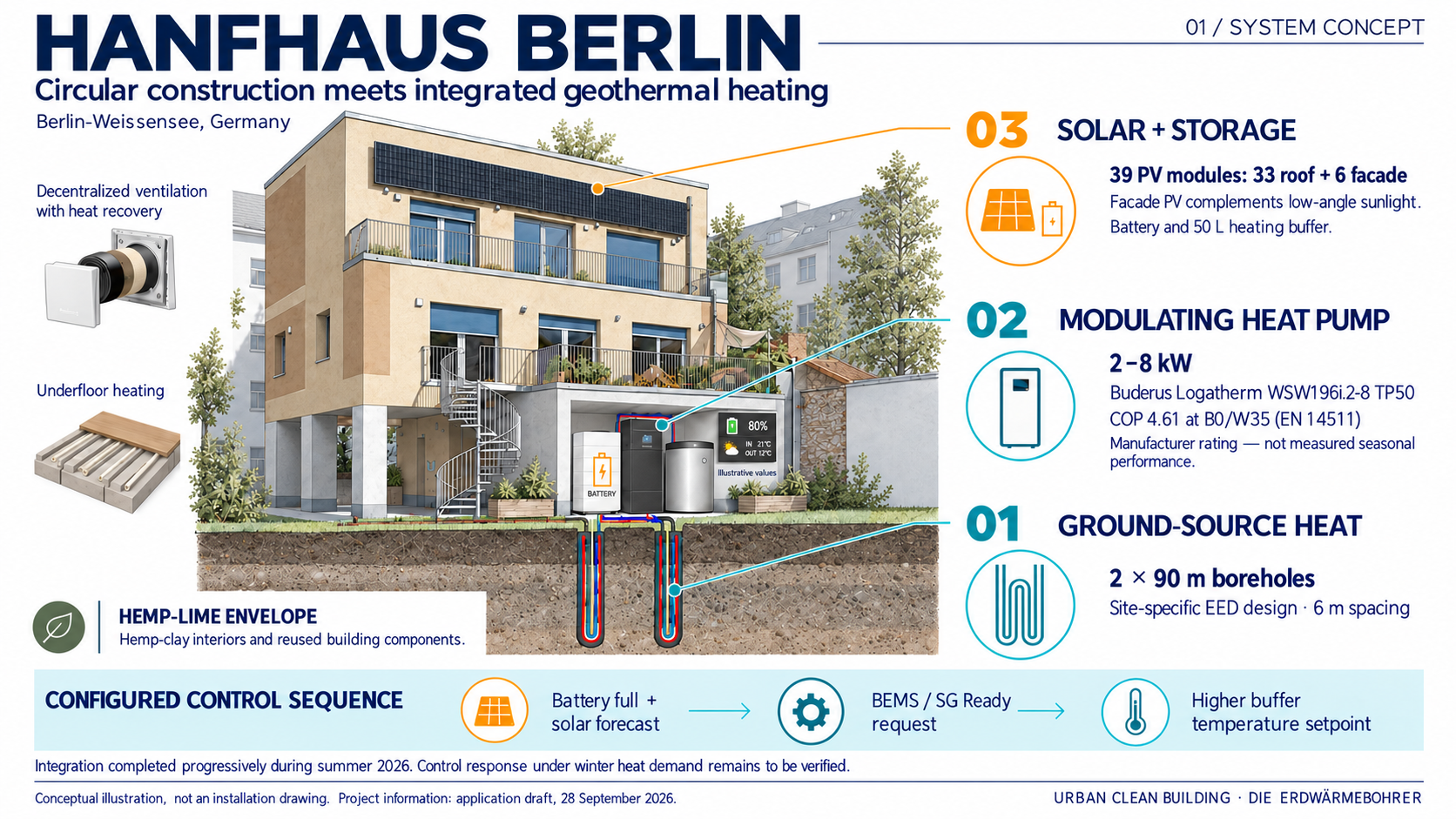
Hanfhaus Berlin is a family home in Berlin-Weißensee that brings circular construction and fossil-free heating together on a constrained urban plot. Its goal is to address both the material impact of construction and the energy required to operate a home.
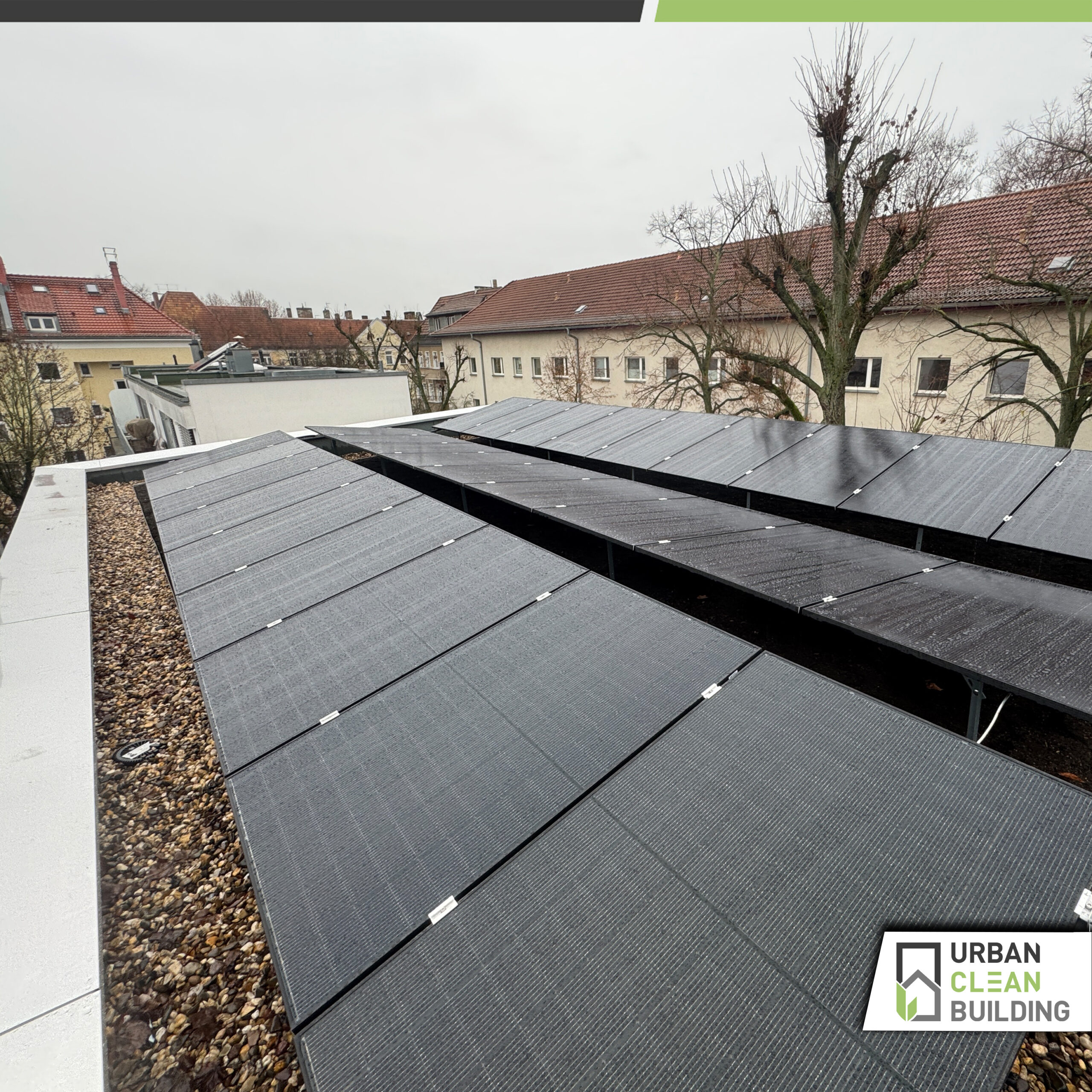
A single ground-source heat pump uses two approximately 90-metre boreholes for space heating and domestic hot water. Roof and façade photovoltaics, battery storage and a heating buffer are connected through the building energy management system. The configured SG Ready strategy raises the buffer temperature when the battery is full and further solar generation is forecast, retaining additional energy as heat. Hemp-lime exterior walls, hemp-clay interior construction and reused elements, including stair treads from former Berlin Tegel Airport, give the energy concept a distinctive architectural setting.
The project demonstrates an integrated approach using commercially available components. Energy flows can now be read separately for PV generation, grid supply, household use, the heat pump and battery charging and discharging. Seasonal performance and the effect of the newly completed control integration remain subject to monitoring.
Steps to vote

1

Browse through the projects across the three categories.

2

Identify the project you are convinced is making the greatest impact.

3

Vote for your favourite project using the link below.