
1 December 2026
Brussels, Belgium
#HPForum 2026
Award Ceremony
1 December 2026
SQUARE Brussels

Competing in the category:

Large Heat Pump Award
jci
Location: Germany
Year of submission: 2026
Organisation: Customer and Contractor Johnson Controls DE, Hamburg Wasser
Sector of application: Industrial
Funding from: Public

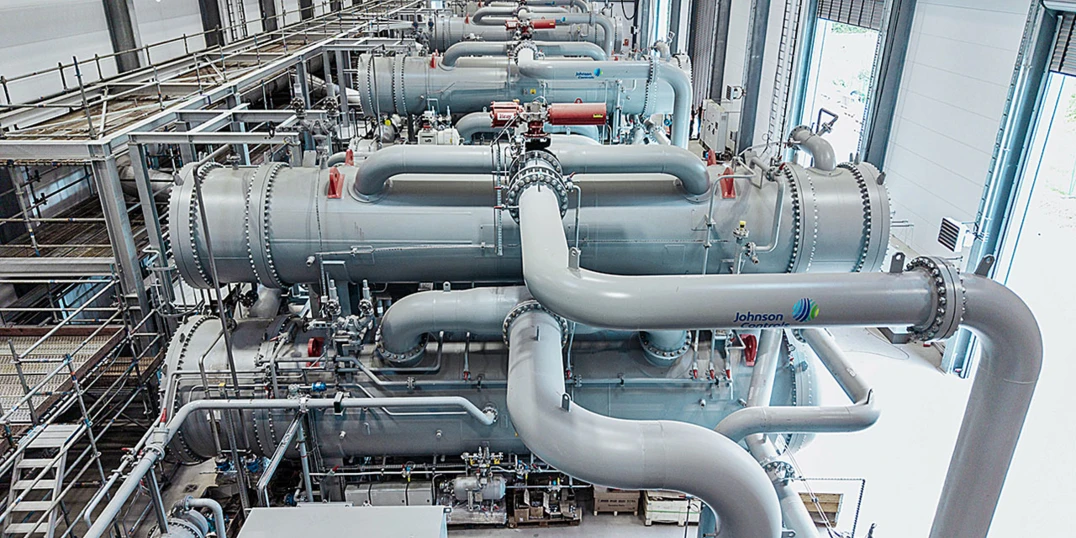
Hamburg Wasser and Hamburger Energiewerke have built Germany's largest wastewater heat pump at the Dradenau sewage plant. Four 15 MW turbo-compressor units deliver 60 MW of thermal output, withdrawing heat from treated wastewater that stays at 18-12 °C or more less all year. The water is heated to about 95 °C and fed straight into Hamburg's district heating grid. The plant can supply up to 39,000 households and save up to 90,000 tonnes of CO₂ per year by replacing fossil-generated heat. It is a key module of the Energiepark Hafen to make Hamburg's heating coal-free by 2030. The project also created a showcase for others. Hamburg's years of advocacy changed the German CHP Act so that wastewater heat is treated as an environmental heat source, opening funding for similar plants across Germany.

Hamburg Dradenau Wastewater Heat Pump
Goal: Hamburg wants its district heating to be coal-free by 2030 and climate-neutral by 2040. The Dradenau project, part of the Energiepark Hafen, contributes by tapping a local renewable heat source to replace the coal-fired plant in Wedel.
Problem: Much of Hamburg’s district heat still comes from fossil fuels, which causes high CO₂ emissions. At the same time, usable heat is wasted. About 450,000 cubic metres of wastewater flow through the city’s sewage plant every day, and the treated water is discharged into the Elbe at a stable temperature of at least 12 °C, even in winter.
Solution: Hamburg Wasser and Hamburger Energiewerke are building Germany’s largest wastewater heat pump at the Dradenau sewage plant. Four 15 MW compression heat pumps (60 MW thermal in total) extract heat from the treated wastewater and raise it to about 95 °C. The hot water goes to the neighbouring gas-and-steam plant, can be buffered in a heat store, and is then fed into the city’s district heating network.
Impact: The plant can supply heat for up to 39,000 households and save up to 90,000 tonnes of CO₂ per year compared with fossil heat generation.

Steps to vote

1

Browse through the projects across the three categories.

2

Identify the project you are convinced is making the greatest impact.

3

Vote for your favourite project using the link below.