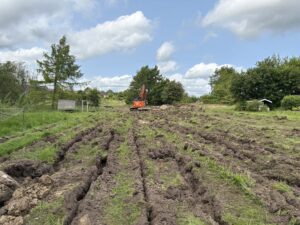
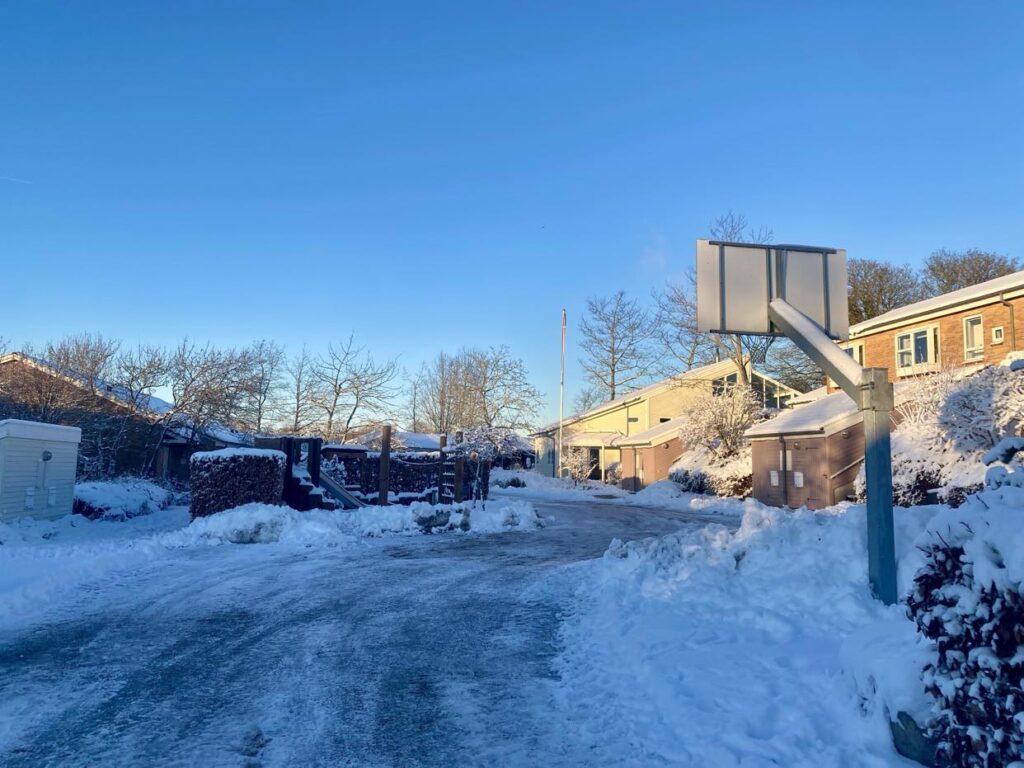
When the central gas boiler serving 20 terraced homes and a communal building in Jystrup, Denmark wore out, the housing cooperative replaced it with 21 individual geothermal heat pumps – one per dwelling. But their compact site left no room for a geothermal heat source, until the local municipality of Ringsted offered up a nearby meadow.
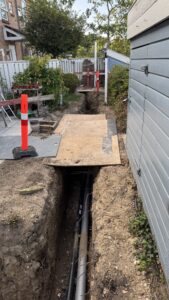
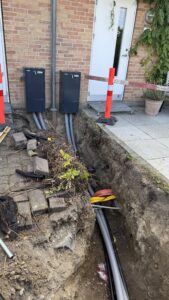
Today, 4,800 metres of plastic pipe ploughed into that meadow at one metre depth collect low-temperature geothermal energy. A thermal network, also known as a thermonet, carries this energy to the 21 distributed IGLU heat pumps.
The thermonet system replaced not only the gas boiler but also the old, insulated pipe network, which had suffered significant heat losses. Instead, the uninsulated thermonet now contributes with heat gain from the surrounding soil, put to use by the heat pumps.
Jystrup lies outside the reach of conventional district heating. The cooperative considered a centralised solution with one large heat pump and insulated pipes, but a thermonet with decentralised heat pumps proved both cheaper and more energy efficient.
The project cost approximately DKK 6 million (€803,000), financed through a 30-year mortgage. Monthly housing charges rose by DKK 600 (€80), but residents no longer pay for gas or boiler maintenance. Each household covers the electricity for its own heat pump.
Ringsted municipality’s mayor has highlighted the project as a model for the green transition in rural areas where conventional district heating is not feasible.