

Energy security is not only about supply. It is also about price stability and protecting Europe’s economy from external shocks.
At a recent debate organised by EHPA in the European Parliament, speakers agreed that electrification offers a pathway to both by reducing dependence on imported fossil fuels and increasing control over homegrown energy and domestic energy systems.
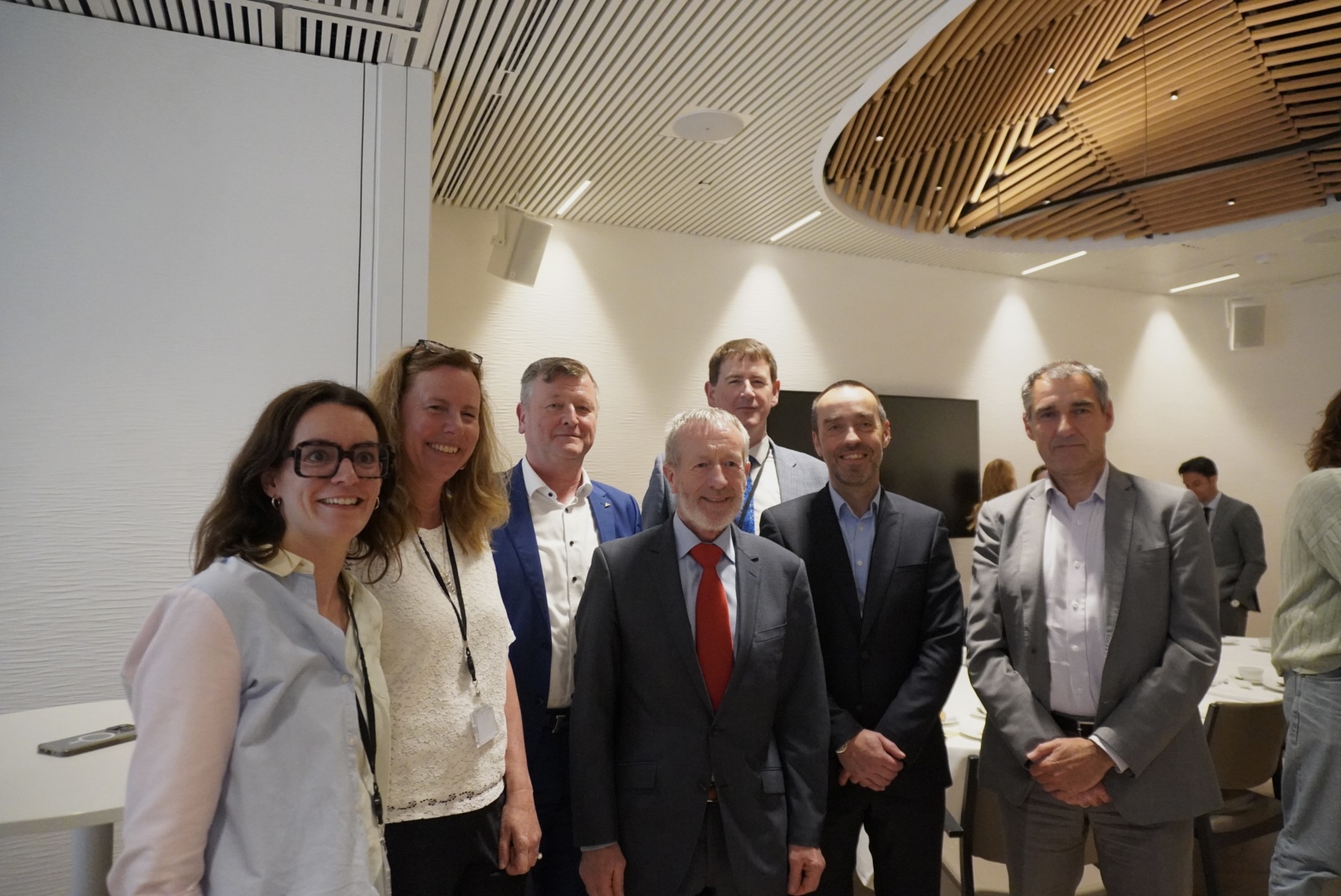
The lunch debate was hosted by MEPs Seán Kelly and Bruno Tobback on 5 May and held under Chatham House rules.
It featured keynotes from Stéphanie Bouckaert (International Energy Agency), Patrick Crombez (EHPA board, Daikin Europe) and Robert Nuij (European Commission, Directorate for Energy), as well as questions from the audience.
Policymakers and industry representatives agreed that heat pumps stand out as a concrete and scalable solution.
Already cost-competitive with gas boilers in multiple European countries, they represent a key technology to decarbonise heating while strengthening energy independence.
Importantly, industry is ready to deliver: manufacturers have invested heavily in European production capacity and are prepared to scale further.
Globally, electricity demand continues to grow rapidly, driven largely by major economies such as China. At the same time, structural solutions, including energy efficiency, electrification and demand-side flexibility, are becoming essential to stabilise energy systems. For households, smarter electricity use alone could deliver savings of up to 10-15% on annual bills.
However, participants referred to several barriers that must be addressed, with policy and regulatory stability remaining critical to unlocking long-term investment.
Persistent challenges – including the electricity-to-gas price ratio, regulatory fragmentation, and constraints linked to F-gas and PFAS – continue to slow deployment. In parallel, skills shortages and workforce needs are becoming increasingly urgent as the sector grows.
Buildings were identified as a major blind spot. Accounting for around 40% of the EU’s energy demand, the sector is progressing too slowly, with renovation rates falling short of what is needed.
Electrification in buildings must therefore accelerate, supported by improved access to grids and faster connection times for new projects.
Affordability also remains central. While heat pumps offer long-term savings, upfront costs can still be a barrier for consumers.
Addressing this will require targeted policy solutions, alongside market instruments that reward flexibility and reduce system costs.
Upcoming EU initiatives, including an Electrification Action Plan in June 2026, are expected to provide further direction.
The debate followed EHPA’s latest data release: sales of residential heat pumps increased by 25% on average in the first quarter of 2026 in France, Germany and Poland. This includes the period following the closure of the Strait of Hormuz on 2 March, which significantly pushed up gas and oil prices.
Overall, around 575,000 units were sold across 11 European countries between January and March 2026 – a 17% increase compared to 494,000 units in the same period in 2025.
In Belgium alone, installers reported a 40% rise in heat pump requests since the start of the Iran conflict, highlighting how consumers respond quickly to fossil fuel price volatility.