
As artificial intelligence accelerates across Europe, energy systems are facing a new challenge: keeping up. Data centres already account for around 1.5% of global electricity consumption, and that figure is expected to more than double by 2030, driven largely by AI and digital technologies.
That growing demand is making one thing clear: the future of energy must be smarter, more flexible, and more connected.
For heat pumps and thermal energy storage, digitisation is opening the door to a new era of intelligent energy management. Automation, interoperability, and AI-driven optimisation can help maximise energy efficiency and renewable energy use.
At the heart of this transformation are two EU-funded projects involving the European Heat Pump Association, ECHO and BEST-Storage. They focus on integrating thermal energy storage to enhance flexibility, efficiency, and the use of renewable energy.
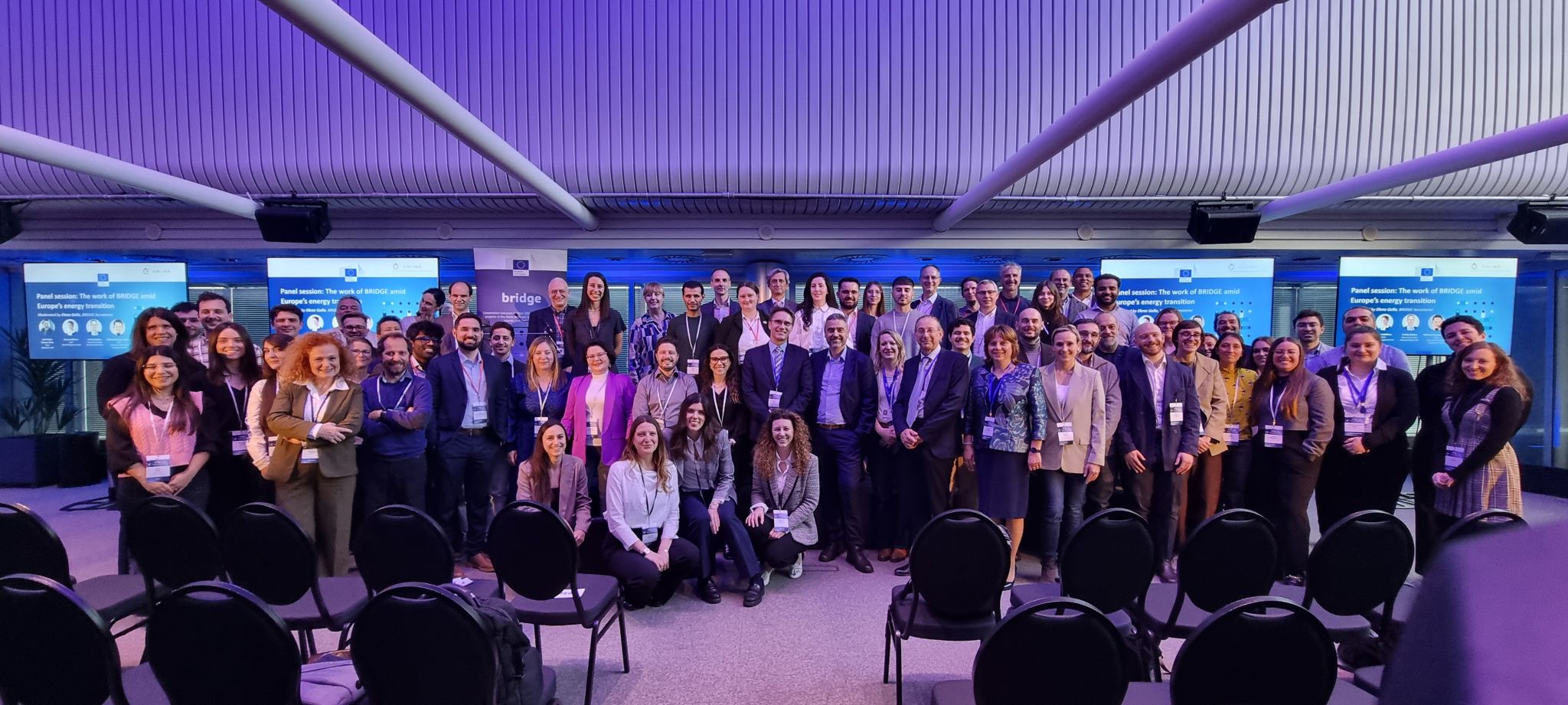
These projects were recently showcased at the BRIDGE 2026 Assembly. This is an annual conference organised by the European Commission, which brings together projects on smart energy systems funded under the EU’s Horizon research and innovation funding programme. EHPA colleagues Sofia Silva (ECHO) and Beñat Uribesalgo (BEST-Storage), both responsible for dissemination and communication activities, presented the latest developments and insights from their respective projects.
They were joined by Emilia Pisani (RISE, Thumbs Up project) and David Verez (WATTEGA, HYSTORE project). These projects have joined the Thermal Energy Storage Cluster of projects to collaborate, share knowledge, and accelerate the development of thermal energy storage solutions—technologies that capture and store heat or cold for later use, helping to better balance energy supply and demand.
Discussions at BRIDGE 2026 highlighted several key priorities for the sector, including digitalisation, system integration, flexibility, and risk management. Digitalisation, in particular, was recognised as a cornerstone of the energy transition, enabling more efficient, secure, and resilient energy systems. Key topics included data governance, cybersecurity, and IT infrastructure.
The event also featured parallel working group sessions on Consumer and Citizen Engagement, Business Models, Regulation, and Data Management. Participants shared progress from the past year and explored ways to further strengthen collaboration, refine methodologies, and align their work with evolving policy and market needs. Sofia Silva and Beñat Uribesalgo contributed to discussions in the Consumer and Citizen Engagement and Regulation groups, sharing insights and future perspectives.
Overall, the BRIDGE Assembly underscored the importance of collaboration across projects and sectors. It reaffirmed the role of BRIDGE as a platform for knowledge exchange and as a catalyst for moving from research and innovation to large-scale deployment of clean, secure, and affordable energy solutions across Europe.
A report summarising the discussions will be published in the coming months. In the meantime, you can learn more about EHPA’s EU-funded projects and their contributions to the future of clean heating and cooling.